
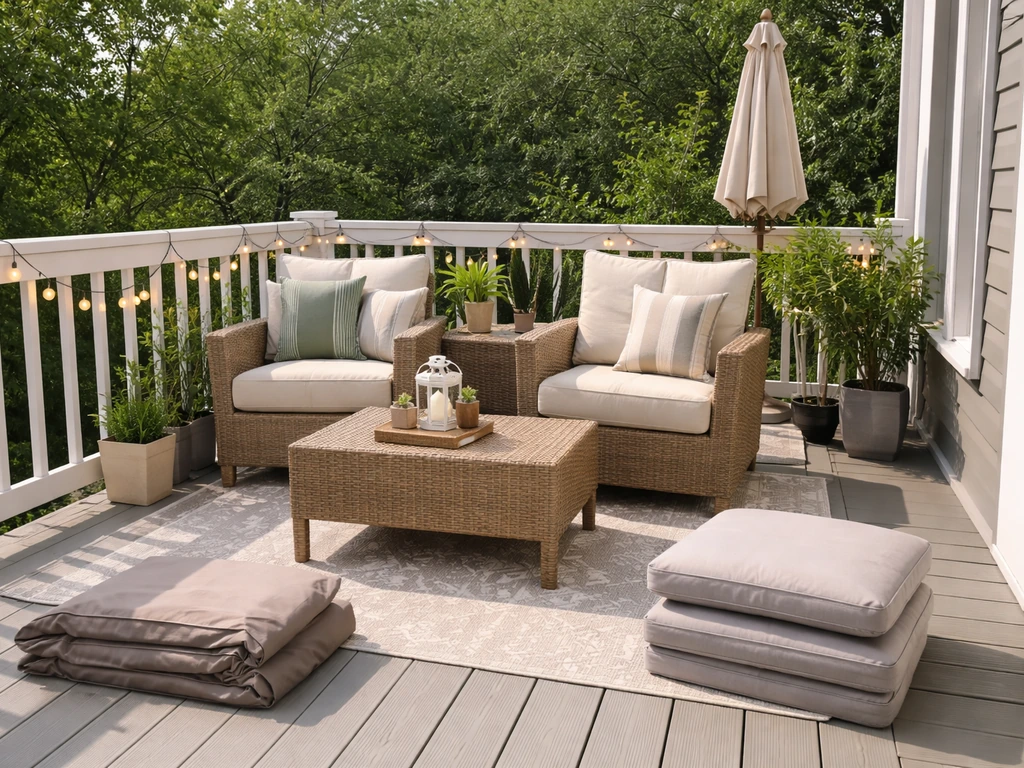
The patio must-haves worth buying on Amazon right now fall into five categories: seating and dining furniture sized to your space, outdoor cushions and a weatherproof rug, basic lighting and shade, furniture covers and storage, and a few cleaning and maintenance supplies. Get those five categories right, with the correct measurements, the right materials, and decent reviews, and you can turn an empty patio into a genuinely comfortable outdoor room in one order.
Amazon Patio Must Haves Checklist for a Comfortable Patio

Rowan Vale
29 Apr 2026
Core patio must-haves by space
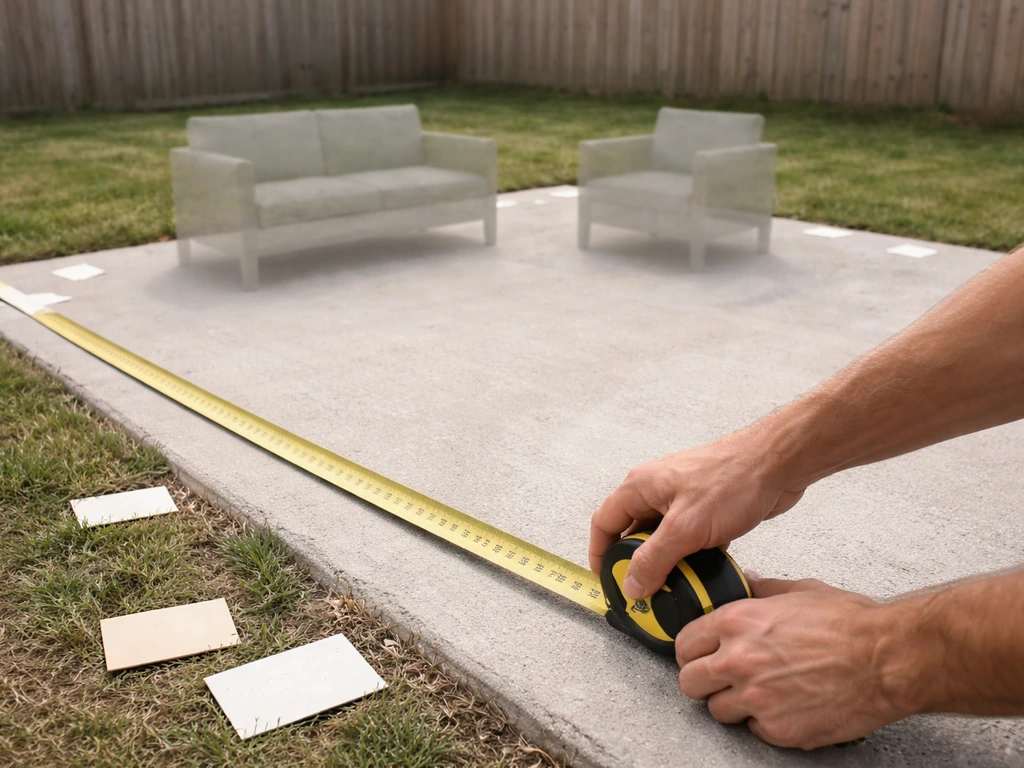
Before you add anything to your cart, measure your patio. This one step prevents most of the sizing mistakes people complain about in reviews. Once you know your dimensions, everything below becomes much easier to get right.
Seating: chairs, loveseats, and sectionals
For a small patio (under 120 square feet), a two-person loveseat or a set of two lounge chairs with a side table is usually plenty. For a mid-size patio, a three-seat sofa with two club chairs and a coffee table fills the space without crowding it. The key seat-height spec to look for is 17 to 19 inches from the ground, that is the standard outdoor chair seat height, and it matches the height of most outdoor coffee tables. Anything lower and older guests will struggle to stand up; anything higher and it feels like perching on a bar stool.
Dining: tables, chairs, and clearance rules
If you want to eat outside, plan around a rule most people skip: allow at least 36 inches of clearance on every side of a dining table so chairs can be pulled out and people can walk past. That means a 48-inch round table actually needs a footprint of about 10 feet by 10 feet to feel comfortable in use. A standard outdoor dining chair seat height of 17 to 19 inches also needs 10 to 12 inches of clearance between the seat and the table underside, so double-check that measurement when pairing a table with separate chairs on Amazon.
Comfort and ambiance: lighting must-haves
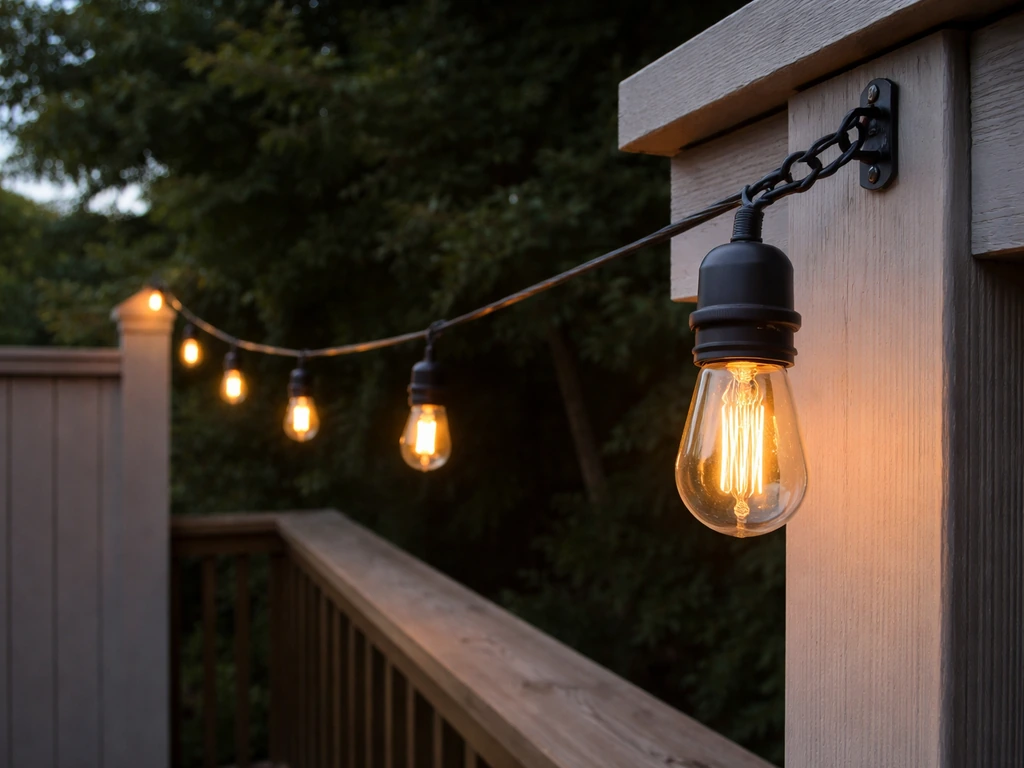
String lights are the single highest-return purchase on a patio. A 48-foot strand of outdoor-rated Edison bulb string lights costs between $25 and $50 on Amazon and completely changes the feel of the space at night. Look for IP65 water resistance rating at minimum, and get shatterproof bulbs if you live somewhere windy. Solar-powered versions work fine in full-sun spots; for shadier patios, go plug-in. A pair of solar stake lights flanking a seating area or pathway adds a finished look for under $20 and needs zero wiring.
Outdoor rugs, cushions, and weather-ready comfort items
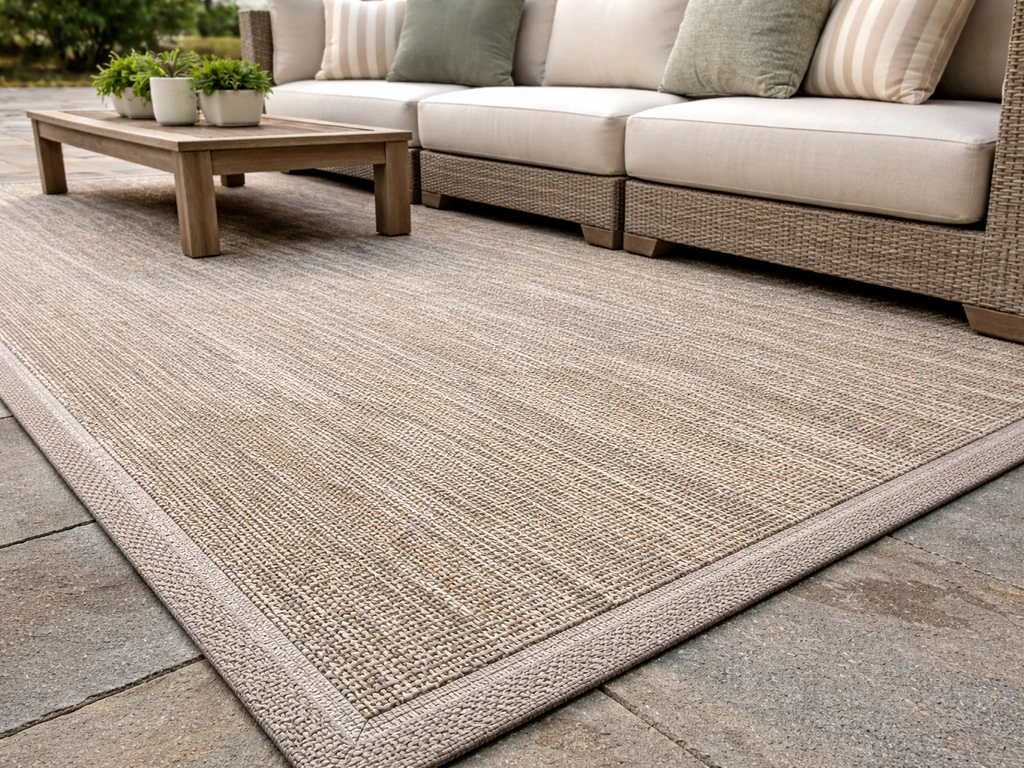
An outdoor rug is what makes a seating group look intentional rather than random. A SURYA rug guide also notes that colors can fade over time, even in outdoor conditions. The most practical material is solution-dyed polypropylene. It resists UV fading, dries quickly after rain, and handles stains better than almost any other outdoor rug fiber. The main caveat: if your patio is in a humid climate or stays shaded, you need to let the rug air dry completely after heavy rain to prevent mildew from building up underneath. Flip it up against a wall after a big storm, let it dry, then lay it back down.
For sizing, the rug should be large enough that the front legs of all your seating furniture sit on it. A 5x8 rug works for a loveseat-and-two-chairs setup; a 8x10 is better for a full sectional. Going too small is the most common mistake people make, and it makes expensive furniture look cheap.
For cushions, look for fabrics labeled solution-dyed acrylic or Sunbrella-grade fabric. These do not promote mildew growth and hold color well under direct sun. Avoid cushions that only say "polyester fill" with no mention of the cover fabric's UV treatment, those will fade and go limp in one season. Check that the cushion cover has a zipper so you can remove and rinse it. When you do clean them, use mild soap and water only; skip chlorine bleach and harsh cleaners, which degrade the fabric's weather resistance over time.
Storage, protection, and weatherproofing essentials
Furniture covers are the cheapest way to double the lifespan of your patio furniture. To buy the right size, measure each piece's length, width, and height, including any legs that elevate it. Cover sizing is often listed as the cover's drop height from the top down, not your furniture's total height, so read product descriptions carefully. Look for covers with elastic hems and at least four windproof buckles or drawstrings. In a wind event, a cover without tie-down points becomes a sail that can damage your furniture or your neighbor's yard.
One rule that applies to every cover, regardless of brand: furniture must be completely dry before you put the cover on. Trapping moisture underneath is how mold and mildew develop on furniture that is supposedly "protected." The same goes for storing the cover itself, keep it dry and in a cool spot when it is not in use. When you take the cover off after winter, check both the furniture surface and the cover itself for any damp spots before folding and storing.
A deck storage box is worth buying if you have cushions you want to keep out of the elements. Look for a unit with at least 60 gallons of capacity (enough for 4 to 6 standard seat cushions), a gas-lift lid, and a weather-resistant resin or HDPE construction. These double as extra seating when you have guests. Amazon carries a solid range from about $80 to $200, and most ship free with Prime.
Safe setup: umbrellas, shade, planters, and ground protection
A patio umbrella is only as useful as its base. A 9 to 10-foot diameter canopy needs a properly weighted base, a common rule of thumb is to multiply the canopy width in feet by 10 to get a baseline weight in pounds. So a 9-foot umbrella calls for a base of at least 90 pounds. Market-style umbrella bases are typically around 20 inches in diameter, which works for most standard setups. If your umbrella goes through a table hole, check the pole diameter on both the table and the umbrella before ordering, a 1.5-inch pole needs a matching hole, not a gap of more than about a quarter inch, or the umbrella will wobble constantly.
Planters and ground protection matter more than people expect. A heavy ceramic or concrete planter near a seating corner adds visual weight that makes the space feel anchored and reduces how much the area looks like temporary furniture floating in the open. For ground protection under furniture legs, use felt-bottom furniture pads or rubber non-slip caps to protect deck boards and prevent rust staining from metal legs. These cost almost nothing on Amazon and prevent real damage.
If you have a wood or composite deck, consider a deck-protector mat under your grill or fire pit area. These are rated for heat and ember resistance and are very different from standard outdoor rugs, do not substitute one for the other.
Maintenance basics to keep everything looking new
The maintenance routine that actually gets followed is a simple one. A few times per season, wipe down furniture frames with mild soap and water. For aluminum or powder-coated frames, check for chips in the finish and touch up with outdoor paint to prevent rust from spreading. For wicker or rattan, rinse with a hose and let it dry fully, standing water in woven materials causes the same mildew problem as with rugs.
For cushion fabric, stick to mild soap and water applied with a soft brush. Do not use a steamer or iron on outdoor performance fabrics, the heat degrades the UV-resistant coating. Do not use abrasive cleaners or bleach-based products on covers either, since those break down the waterproofing treatment. Rinse everything thoroughly after cleaning and allow it to air dry completely before reassembling or covering.
At the end of the season, store covers dry, store cushions in your deck box or indoors, and fold up anything you can bring inside. The furniture that lasts ten years is almost always the furniture that gets covered and stored properly, not necessarily the most expensive stuff.
How to buy on Amazon today: filters, materials, sizing, and shipping
Amazon's patio furniture section can feel overwhelming, but a few filters cut through most of the noise quickly. Start by filtering by average customer review (4 stars and above), then sort by "best sellers" within your category to see what is actually moving. If you want a quick shortlist, you can also use the amazon patio furniture best sellers filter approach to find what is popular and well-reviewed right now. After that, look at Amazon patio best sellers to quickly spot popular, well-reviewed options that match your space. Check the number of reviews, not just the rating, a 4.6-star product with 3,000 reviews is much more meaningful than a 4.9-star product with 12 reviews.
For materials, use the search bar to add modifiers: "rust-resistant," "powder-coated," "all-weather wicker," or "solution-dyed" narrow results toward products built for outdoor use. For cushions, search "Sunbrella" or "solution-dyed acrylic" directly. For rugs, filter by "outdoor" and add "polypropylene" to the search string. These aren't just marketing words, they tell you the item was actually designed to handle weather.
Always read the product dimensions on the listing page before adding to cart. Sellers sometimes list the item name with a generous description but the actual dimensions in a small spec table lower on the page. For dining sets, check whether the listed price includes chairs or is for the table only, this catches a lot of people off guard. For umbrella bases, confirm the pole diameter compatibility is listed in the specs.
On shipping and returns: most Prime-eligible patio items ship free, but large furniture sets sometimes arrive in multiple boxes on different days. Check the product listing for "ships in N packages" before ordering so you are not surprised. For returns, look for listings that explicitly state "free returns" rather than just "returnable", the difference matters if a chair arrives damaged. Large items that require freight shipping often have a restocking fee, so read the return policy tab before you buy.
If you are hunting for better prices beyond Amazon's standard listings, it is also worth comparing against Amazon patio deals running today, or checking whether an Amazon promo code for patio furniture can be stacked at checkout. You can also browse amazon patio deals today to compare current discounts across seating, rugs, and covers. If you are specifically shopping for amazon basics patio furniture, compare sizes, materials, and review counts before you checkout.
Quick priority checklist before you order
- Measure your patio length, width, and any obstacles like doors or stairs before shopping for any furniture
- Decide on seating vs. dining first—buy the anchor piece (sofa set or dining set) before filling in accessories
- Choose an outdoor rug sized so front legs of all seating sit on it, in solution-dyed polypropylene
- Add cushions in solution-dyed acrylic or Sunbrella-grade fabric with zipper covers
- Order covers sized to your furniture's actual measurements with buckle or drawstring tie-downs
- Pick a string light strand rated IP65 or higher in the length you need for your space
- Size your umbrella base to at least 10 pounds per foot of canopy diameter and verify pole diameter compatibility
- Add a deck storage box for cushion storage if you get regular rain or live in a humid climate
- Grab furniture leg caps or pads to protect deck surfaces from rust or scratching
- Filter by 4-plus stars with at least several hundred reviews, and always check the dimensions tab before buying
FAQ
I planned for 36 inches around the table, but my patio has obstacles. What should I adjust first?
If you are buying a dining set, measure from the table edge to any nearby wall, grill, or planter and keep the 36-inch pullout clearance concept, but treat it as a “chair travel radius” not just a straight gap. If you cannot get it everywhere, prioritize clearance on the walkway side first, then reduce the other side slightly with chairs that have slimmer frames (look for narrower chair widths in the listing specs).
How do I tell if an “outdoor” cushion will actually hold up in my climate?
When a listing says “outdoor,” confirm the fabric or materials are rated for the specific weather you have, especially sun exposure and humidity. For very sunny patios, prioritize solution-dyed acrylic or similar UV-stable covers, and for rainy or humid areas, prioritize cushions that fully zip off for drying (and avoid foam cores that trap water). If a product has no drying or storage guidance, assume you will need more frequent air-drying.
My patio rug gets damp after storms. How can I prevent mildew underneath when I have seating on top?
For rug moisture control, use the “dry time test” after a heavy rain: press a clean white cloth or paper towel onto the rug’s underside edge. If moisture transfers, you need more drying time before bringing furniture back onto it or before covering the rug. Also consider using a breathable outdoor rug pad, not a rubber-backed indoor pad, because trapped heat and lack of airflow increase mildew risk.
What are the most common reasons patio furniture covers still lead to rust or mildew?
Covers can still fail if they are too tight or if the item is stored covered when wet. Aim for covers that match the piece’s height including legs and that have drawstrings or buckles, then leave the cover “slightly loose” at the bottom so air can vent during light drying days. Do not store the cover in a sealed plastic bin immediately after winter, let it fully dry first.
My umbrella base seems right, but the umbrella still wobbles. What else should I check?
If your umbrella wobbles, the base weight rule is only a starting point. Confirm the base is sized for the umbrella pole diameter and that the base plate or pole socket is tight (no more than a small fit gap). Also check whether you need to account for wind gusts in your area, in that case move to a larger base than the baseline and keep the umbrella closed during storms.
Felt pads protect my deck feet, but do I still need a heat mat for a grill?
For deck protection, felt pads and rubber caps help with point-contact scuffs and rust staining, but they do not prevent heat damage under grills or fire pits. For high-heat zones, use a purpose-rated heat and ember-resistant mat, and make sure its area covers the hottest load plus at least a few inches around where embers could land.
Do I need both a rug and furniture leg pads, or is one enough?
If your furniture is on a rug, you still need ground protection at the leg-contact points because outdoor leg metal can rust through condensation. Use a rug plus leg pads, then clean the leg pad underside periodically. For storage boxes that hold cushions, avoid sealing cushions in plastic bags that trap humidity, choose breathable storage or keep them fully dry before closing the lid.
Should I buy one big cover for my whole seating group or separate covers for each piece?
When covers are ordered for separate pieces, buy covers per item, not one big cover, unless the listing specifically says it fits grouped items with room to vent. Mixing sizes is a common mistake, one small cover that strains at the seams can tear, and one loose cover can balloon. Measure each piece height and width separately and match to the cover’s drop-height spec when provided.
What should I double-check so patio cushion covers don’t fit poorly?
To confirm your cushions will fit, compare cushion thickness and cover closure type, zippers vs button flaps. Even if the listing name sounds like the right chair size, the real fit depends on cushion dimensions, especially seat depth. If you are between sizes, choose the slightly larger cover that can zip smoothly, not the tighter one that forces seams.
I ordered a patio set that ships in multiple boxes. How should I handle missing parts or damage quickly?
If your patio furniture ships in multiple boxes, treat assembly and claims as a timeline: check contents within the delivery window for each box, snap photos of any missing hardware or damage, and compare what arrives against the parts list in the manual. If the seller requires warranty through the manufacturer, keep the order number and the product SKU from the listing.