
The best discount patio furniture right now is most reliably found at big-box store clearance sections (Home Depot, Lowe's, Walmart), warehouse clubs like Costco, and online marketplaces like Wayfair and Amazon, but only if you know how to confirm the discount is real once shipping and fees are factored in. We're in late June, which puts you right at the edge of peak summer clearance territory: stores are starting to mark down sets they bought in bulk for spring, and the deeper cuts are only weeks away. That means today is a solid time to buy if you find a verified low price, but if you can wait until late July or August, you'll likely see an extra 10 to 30 percent shaved off.
Best Discount Patio Furniture: How to Find Real Deals

Rowan Vale
30 Jun 2026
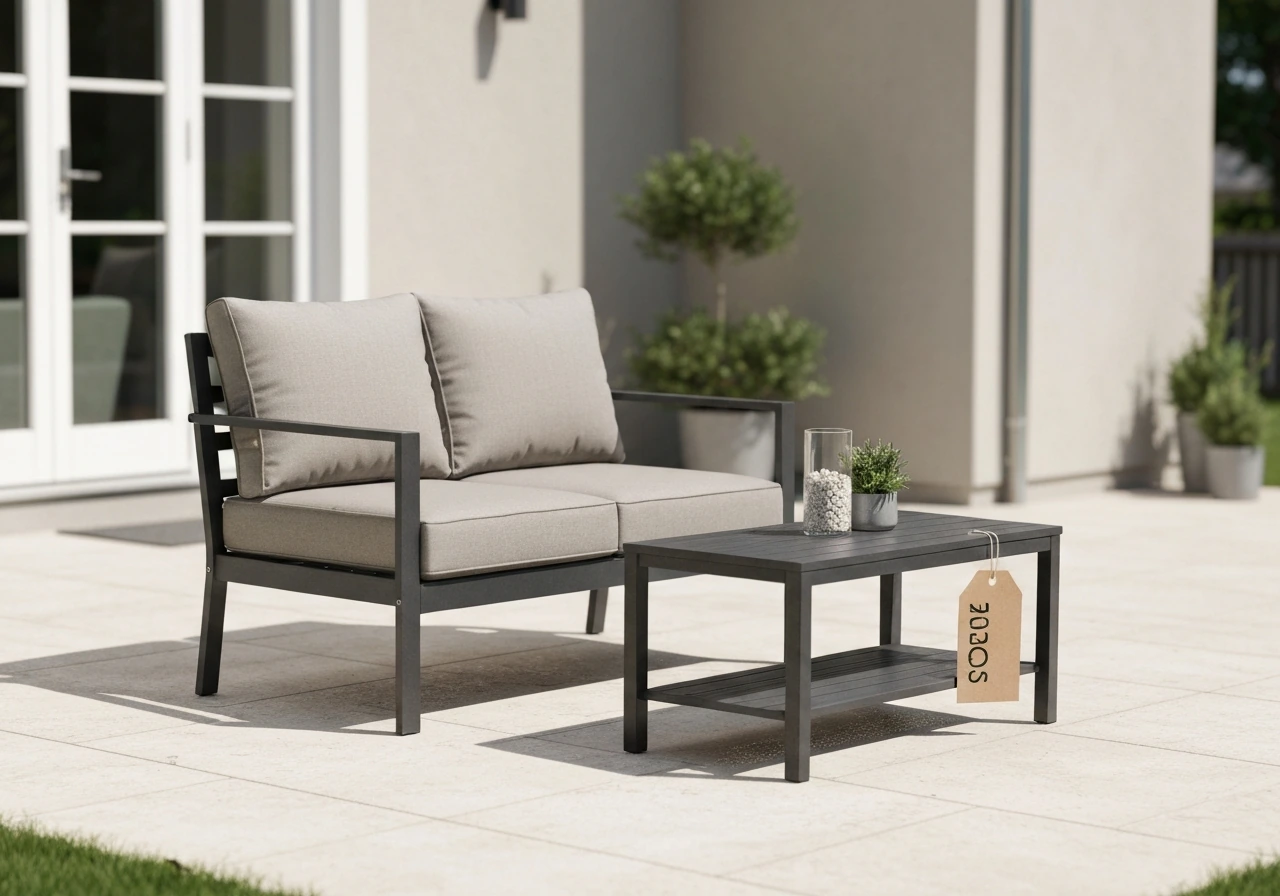
Where the best patio furniture discounts usually come from
Most genuine patio furniture discounts fall into a few predictable buckets. The biggest are end-of-season clearance events, where retailers need floor space and want to move inventory before fall. These happen at big-box stores, warehouse clubs, and national chains. The second bucket is overstock and returned merchandise, which shows up on marketplaces like Amazon and Wayfair, and also in outlet-style stores like Big Lots. Third is promotional sales tied to holidays (Memorial Day, Fourth of July, Labor Day), where brands and retailers run legitimate percentage-off events, though the depth of those deals varies a lot.
Warehouse clubs like Costco tend to offer competitive per-piece pricing with limited SKUs, meaning once a set is gone, it's gone. Big-box stores like Home Depot and Lowe's carry the widest assortment and run clearance throughout the season. Walmart's rollback pricing can look impressive on the surface, but shoppers frequently flag that some "clearance" tags don't reflect meaningful reductions from the real selling price. Checking the price history before assuming a "clearance" label means you're getting a deal is worth the extra minute.
Best times to buy: seasonal clearance and major sale windows
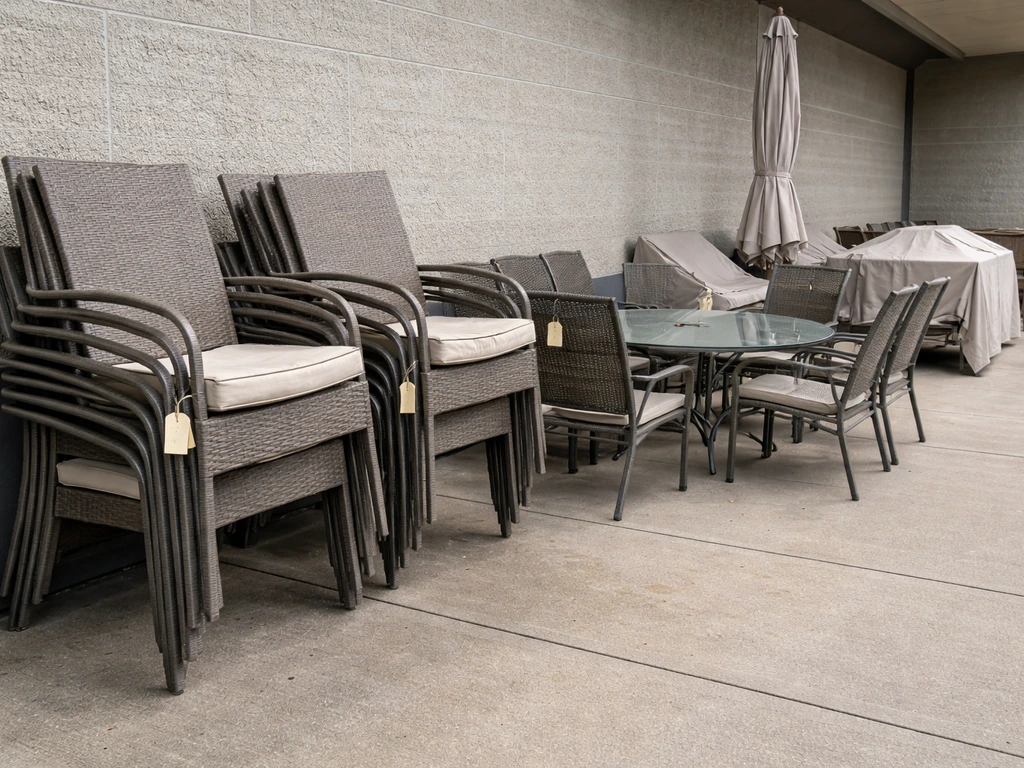
Patio furniture follows a very predictable seasonal pricing curve in the US. If you understand the cycle, you can time your purchase to hit the deepest discounts rather than paying peak prices.
| Time Period | What's Happening | Typical Discount Depth |
|---|---|---|
| February to March | New inventory arrives; deals are thin but sometimes early-season promos appear | 5–10% off |
| Memorial Day (late May) | Major promotional sale event; good but not the deepest | 15–25% off |
| Fourth of July (early July) | Mid-season sale; inventory still strong | 20–30% off |
| Late July to August | Clearance begins in earnest; stores want to move summer stock | 30–50% off |
| Labor Day (early September) | Peak clearance season; best deals on remaining inventory | 40–60% off |
| October onward | Slim pickings; mostly clearance on leftover styles | Up to 70% off, limited selection |
Right now at the end of June, you're in a sweet spot. The Fourth of July sales are arriving or already live at most major retailers. If you see a set you genuinely like at 25 to 30 percent off with good reviews, buying now is reasonable. If you're flexible on style and can wait four to six weeks, late July and August clearance will give you more room to negotiate or find steeper markdowns, especially on larger sets.
How to spot real discounts (and avoid the fake ones)
This is where most shoppers lose money. A "Was $899, Now $499" tag sounds like a great deal, but that reference price needs to be real to mean anything. Under the FTC's pricing guidelines, a former price used in a comparison has to be a genuine price the item was actually sold at for a meaningful period of time, not a made-up anchor to make the current price look like a bargain. Some retailers, particularly on online marketplaces, are known to inflate the "was" price artificially.
California's DOJ specifically warns that "compare at" pricing at outlet stores can be misleading, where the higher reference price may never have reflected what the item actually sold for. The same mechanic shows up online. The fix is simple: use a price history tool. For Amazon products, CamelCamelCamel (and its browser extension, the Camelizer) lets you pull up a price history chart right on the product page, so you can see exactly what the item has sold for over time. If the "sale" price is actually the item's usual selling price, the chart will show it.
For non-Amazon retailers like Wayfair, Home Depot's website, or Walmart.com, use a tool like Google Shopping to compare the current price against other sellers. If one retailer is showing a steep discount but their listed "original price" is 40 percent above everyone else's regular price, the discount is manufactured. Also factor in delivery costs, which can add $50 to $200 or more on large patio sets. A set listed at $499 with a $99 delivery fee is a $598 purchase, compare that total number, not just the sticker.
Quick checklist for verifying a deal is real

- Check price history on Amazon using CamelCamelCamel or the Camelizer browser extension
- Search Google Shopping for the same or comparable item across multiple retailers
- Add delivery/shipping fees to get the true delivered cost
- Check if assembly is included or if there's an additional fee
- Confirm whether the "original price" appears on any other retailer at that level
- Look at whether the item has recent reviews at the "sale" price (suggests it's been priced this way for a while)
Where to shop for deals: your main options compared
There are four main channels worth hitting when you're hunting for discount patio furniture. Each has trade-offs on price, selection, return policies, and convenience.
| Channel | Best For | Watch Out For |
|---|---|---|
| Home Depot / Lowe's | Wide selection, in-store pickup, frequent clearance aisle deals | Shipping fees on large items; check clearance aisles in-store for best prices |
| Costco | Quality sets at competitive price-per-piece, strong return policy (90 days) | Limited SKUs; sets sell out fast and don't return mid-season |
| Walmart (online + in-store) | Low entry price points; convenient local pickup | "Rollback" and clearance tags don't always reflect genuine markdowns; verify price history |
| Wayfair / Amazon | Huge selection, frequent site-wide sales, price history trackable | Shipping costs on large sets; return shipping fees can be steep; fake reference prices common |
| Big Lots | Aggressive seasonal markdowns, especially late summer | Quality tier is lower; check cushion and frame construction carefully |
| Facebook Marketplace / Craigslist | Lowest absolute prices on used sets; good for teak or metal frames | No warranty, no returns; inspect in person before buying |
If you want the lowest price fast with some quality assurance, hit your local Home Depot or Lowe's clearance aisle and cross-reference the price online. Costco is worth checking if you want a better-quality set without hunting for deals, their pricing is typically competitive year-round, and the return policy is genuinely one of the best in retail. If you're open to used furniture, Facebook Marketplace is consistently the cheapest channel for solid metal or teak frames that don't degrade quickly.
How to choose sale-worthy patio furniture
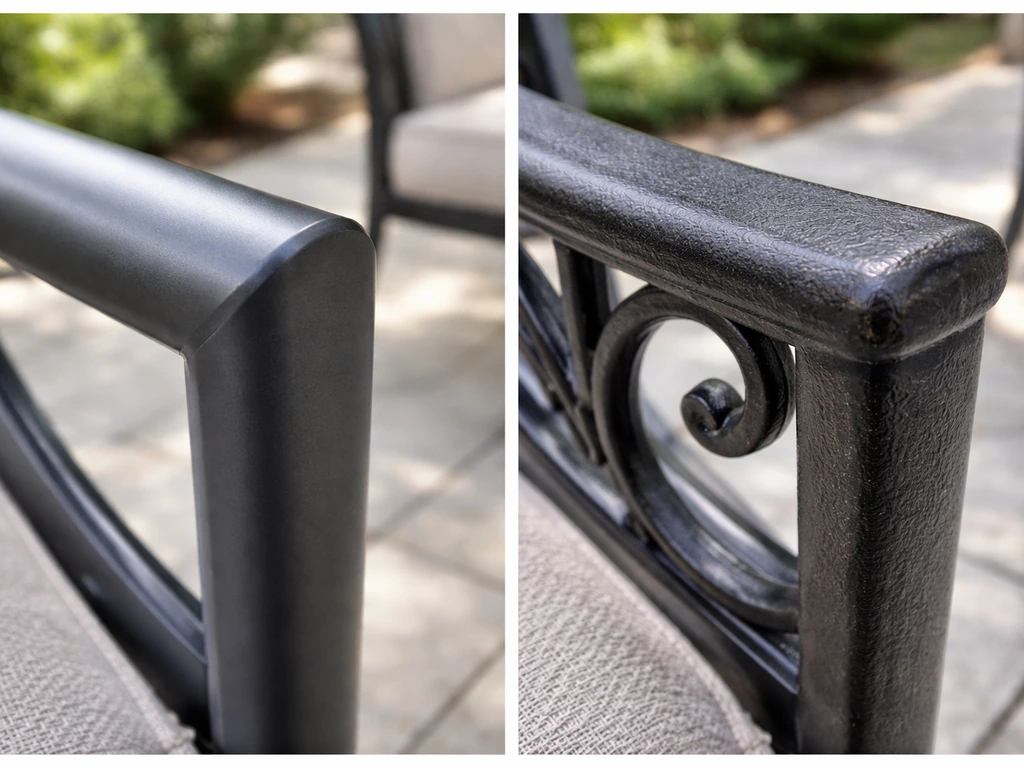
A discounted price only helps you if the furniture holds up. The biggest mistake people make on clearance buys is grabbing the cheapest item without checking whether it'll survive two seasons. Here's how to evaluate materials and durability before committing.
Frame materials
Powder-coated aluminum is the best all-around choice for most climates: it doesn't rust, is lightweight, and holds up to UV and rain well. Wrought iron is heavier and more durable but will rust if the coating chips, so it needs occasional maintenance. Teak is excellent and ages beautifully, but you're paying for that quality and the clearance discounts on teak are usually modest. Wicker and rattan are popular and often the most discounted, but check whether the weave is all-weather resin (good) or natural wicker (avoid for outdoor use unless you live somewhere very dry). Steel frames at the budget end are fine but heavier than aluminum and prone to rust at weld points if not well-coated.
Cushions and covers
Cushions are the most perishable part of any patio set. Look for Sunbrella fabric or similar solution-dyed acrylic, it resists fading and mildew far better than polyester. On clearance sets, the cushions are often the first thing to deteriorate, so confirm that replacement cushions are available and at what cost. Also check cushion fill: high-density foam wrapped in a quick-dry fiber will drain and dry after rain; cheap foam that soaks through and stays wet is a mold magnet. A patio cover or storage solution is worth budgeting for from day one if you're buying cushioned furniture.
Size and space planning
Measure your space before you buy anything, including clearance. A standard 6-person dining set needs at least a 12x12 foot area to allow comfortable chair movement. A sectional sofa set can run 10 feet across. Buying a set that technically fits but leaves no walkable room around it is a common regret. Measure the patio, sketch out the space, and confirm dimensions against the product listing before pulling the trigger.
Clearance buying checklist: what to verify before you commit
Clearance and heavily discounted items come with trade-offs beyond just the lower price. California’s Department of Justice consumer guidance also cautions that “compare at” pricing at outlet stores can be misleading if the higher reference price is inflated, and it may come with limited return options. Run through this list before finalizing any purchase.
- Confirm the return policy: many clearance and outlet items are final sale — know this before buying
- Check whether the item ships complete or if parts are missing (especially relevant for open-box/floor models)
- Verify the warranty still applies: some clearance items carry the standard manufacturer warranty; others don't
- Measure the product dimensions against your outdoor space with a few feet of clearance on each side
- Inspect cushion condition if buying in-store: look for fading, mildew spots, or foam that no longer bounces back
- Check the frame at weld points and joints for rust, cracks, or paint chipping
- Confirm whether delivery/assembly is included or costs extra, and factor that into the total price
- Look up whether replacement cushions or parts are available for the model you're buying
- Read recent reviews specifically about durability after one or two seasons, not just setup experience
- Compare the total delivered cost (item + shipping + assembly) against at least one other retailer
Your step-by-step deal plan for buying today
Here's how I'd approach finding and buying the best deal if I were starting from scratch today. If you want the best deals on patio furniture, focus on real price history and the total delivered cost, not just the sticker price.
- Decide your budget and must-haves: dining set vs. lounge set, how many seats, and what materials you want before you start looking — it keeps you from getting sidetracked by deals on items that don't actually fit your needs
- Measure your outdoor space and write down the maximum footprint the furniture can occupy, including room to walk around it
- Start with Google Shopping: search the type of set you want and filter by your budget to see the range of prices across retailers right now
- Check Amazon and Wayfair first for your shortlisted items and pull up price history using CamelCamelCamel or the Camelizer extension — anything priced at its historical average or above isn't really on sale
- Visit your nearest Home Depot or Lowe's in person and walk the clearance aisle — in-store clearance prices are often lower than what appears online, and you can inspect quality firsthand
- Check Costco.com for current patio sets; if anything matches your criteria, note it as a comparison anchor since their pricing is typically straightforward without inflated reference prices
- Set a price alert on CamelCamelCamel or Google Shopping for any specific item you're watching but not buying today — you'll be notified automatically if the price drops
- If you need the absolute lowest price and are flexible on style, check Facebook Marketplace for used aluminum or teak sets in your area — you can often find solid frames at 50 to 70 percent below retail
- Before checkout, add up the full delivered cost: item price plus shipping plus any assembly fee
- If the price is within 10 percent of where you want it and the quality checks out, buy now — Fourth of July sales are live or arriving, and the sets you want in your size are selling through; waiting until Labor Day risks stockouts on popular configurations
When to wait vs. when to buy now
If you found a set you like, the price history confirms the discount is real, the total delivered cost fits your budget, and the quality checks out, buy it now. Waiting for a deeper discount is a gamble on inventory. Popular sets in common sizes (6-person dining, 5-piece sectionals) often sell out before the deepest clearance hits in August. If you're flexible on style and size, or if you're buying for next season rather than this one, waiting until late July through Labor Day will consistently deliver the best prices. Budget-tier sets from Big Lots and Walmart often hit their lowest prices then, and you can sometimes stack those clearance prices with app coupons or store rewards.
One last thing worth keeping in mind: the cheapest patio furniture is rarely the best value. A $199 set that warps after one season costs more over three years than a $449 aluminum set that lasts a decade. The goal isn't finding the lowest price, it's finding the lowest price on something that will actually hold up. That distinction is what separates a real deal from a clearance regret.
FAQ
If I buy clearance patio furniture, can I return it if it’s not the right fit?
Most “final sale” patio furniture is final even when you bought it on clearance. Before checkout, look for a return window and whether shipping back is on you. For oversized sets, return shipping can erase your savings, so treat clearance items as keep-if-you-like-it purchases unless the listing explicitly says free returns.
Why does the same patio set show different “discounts” online and in my local store?
Yes, because clearance pricing can vary by store location and online fulfillment method. Compare the exact SKU at your local store pickup price versus shipped-to-home price, then calculate total cost (item price plus delivery and assembly fees). A deal that is 30% off the sticker can become not-a-deal once shipping changes.
How can I tell whether a “too good to be true” discount is just a temporary sale or a real markdown?
Check for two numbers: the current sale price and the normal selling price in the last 30 to 90 days. If you see the item already priced near the same level for weeks, the discount may be temporary marketing rather than true reduction. Price history tools help, but also scan nearby sizes, since retailers often keep “original price” inflated on only certain bundles.
What should I verify about cushions to avoid buying clearance furniture with short-lived seats?
Start with cushion thickness and construction, not just the fabric name. For outdoor use, prefer solution-dyed acrylic (or equivalent) with zipper covers, and confirm cushion dimensions match your frames so replacements are available later. If the listing offers only one cushion type, budgeting for future replacements is harder.
What warranty details matter most when buying heavily discounted patio furniture?
Look for warranty coverage that matches outdoor conditions, especially rust and frame coatings. Powder-coated aluminum often has better rust resistance, but the warranty may still exclude damage from chips or improper storage. Read whether the warranty covers structural parts, cushions, and fabric separately, and keep your receipt for claims.
If I buy clearance patio furniture and later sell it, what choices keep the resale value higher?
For resale value, avoid ultra-furnished sets that are hard to disassemble, and prioritize materials that hold up visually, like powder-coated aluminum or teak with intact finish. Also check that cushions are included and usable, since buyers often discount sets with worn cushions heavily even if the frame is fine.
What should I inspect on Facebook Marketplace to avoid getting a “cheap” set that will fail quickly?
Used can be the cheapest route, but the risk is hidden damage. Inspect weld points, check for rust blooms under cushions, and test umbrellas or moving parts for smooth operation. If you see lingering odor or visible mildew on wicker-like materials, plan on re-covering or replacing, which may cancel out the savings.
How do I measure correctly so a patio set that “fits on paper” still feels comfortable?
If you’re short on space, clearance sets can still work, but you need functional clearance, not just measurements. Leave walk paths around chair backs and account for door swings if the patio is near an entrance. For sectionals, measure both the seating footprint and the extended length when pulled out.
Is it worth buying a cover or storage solution at the same time as clearance furniture?
Don’t assume all patio cover sizes match. Measure the furniture footprint after assembly, then choose a cover with enough slack for rain drainage, and verify it’s rated for outdoor weather, not just dust protection. If the set is cushioned, also consider waterproof storage to reduce mildew risk when you’re not using it.
What’s the best way to handle delivery so I can protect myself on clearance or discounted items?
If you can, schedule delivery for a time you can inspect everything immediately. Damage claims are easier when you document the condition on arrival, and some retailers require you to report issues within a short window. Also confirm whether delivery is curbside or inside, since inside delivery can reduce scuffs but may cost extra.