
The best price on outdoor patio furniture right now is usually found at big-box retailers and warehouse clubs running Memorial Day and early-summer promotions, but the true lowest total cost almost always comes down to three things: breaking the price into cost-per-seat, adding delivery and assembly fees, and checking whether returns are free if something arrives damaged or missing pieces. Get those three numbers right and you'll know within 20 minutes whether any deal you're looking at is actually worth taking.
Best Price on Outdoor Patio Furniture: How to Compare Deals

Rowan Vale
31 May 2026
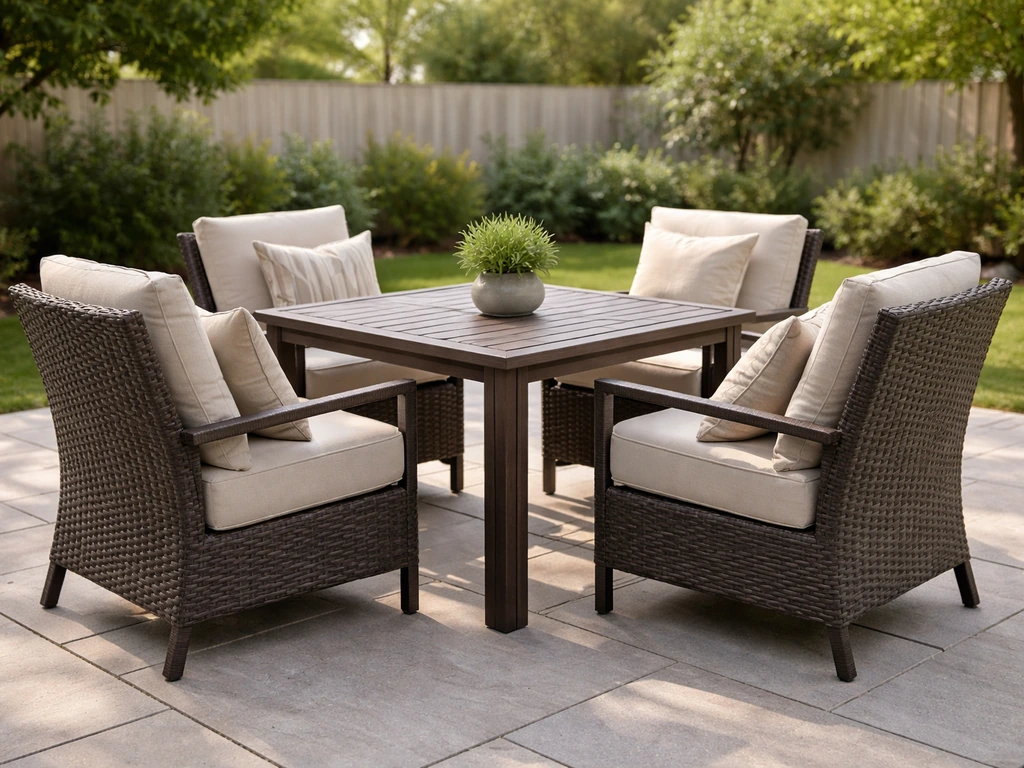
How to find the best price fast: buy today or wait?

Right now in late May and early June, you're sitting in the sweet spot of the patio furniture calendar. Memorial Day sales are either still running or just wrapping up, and retailers are competing hard for summer shoppers. If you need furniture for this season, buying now beats waiting. The next meaningful discount window doesn't arrive until late July, when stores start clearing floor space for fall merchandise.
Waiting until August or September gets you steeper percentage-off deals, but inventory is picked over and sets are often broken up. The calculus is simple: if you want a complete set in the color and size you actually want, buy in May or June. If you're flexible on style and okay with floor models or mix-and-match pieces, late summer clearance can save you 40 to 60 percent.
One thing worth doing today before you visit any store: check the websites first. Home Depot, Lowe's, Wayfair, and Costco all surface their current promotions on their patio landing pages, and prices online frequently differ from what's on the floor tag. I've walked into a Home Depot and paid less than the shelf price simply by showing the associate the online price on my phone. That price-match step alone can save $50 to $150 on a mid-range set.
When the real sales and clearance windows happen
Patio furniture pricing follows a predictable seasonal rhythm. Knowing the windows in advance lets you plan your purchase instead of reacting to whatever's on sale this week.
| Timing | What Happens | Typical Discount |
|---|---|---|
| Late March to April | New season inventory arrives; smaller introductory promos | 5–15% |
| Memorial Day (late May) | Biggest promotional event of the season; broad discounts across retailers | 15–30% |
| Fourth of July | Secondary sale event; good for sets still in stock | 15–25% |
| Late July to August | Clearance begins as fall stock arrives; selection thins | 30–50% |
| Labor Day | Deep clearance on remaining inventory; floor models available | 40–60% |
| October onward | Skeleton inventory; best prices but very limited choice | 50–70% |
Warehouse clubs like Costco operate slightly differently. They bring in patio furniture as a seasonal buy, and once a SKU sells out, it's gone. Costco typically stocks patio sets from March through June. When their limited run is gone, you won't find it again that season regardless of what you're willing to pay. So with Costco, earlier is genuinely better, and the price you see in April is usually the price you'll see in June (they don't typically run storewide percent-off events on these items).
Where to shop: online, big-box, warehouse clubs, and local
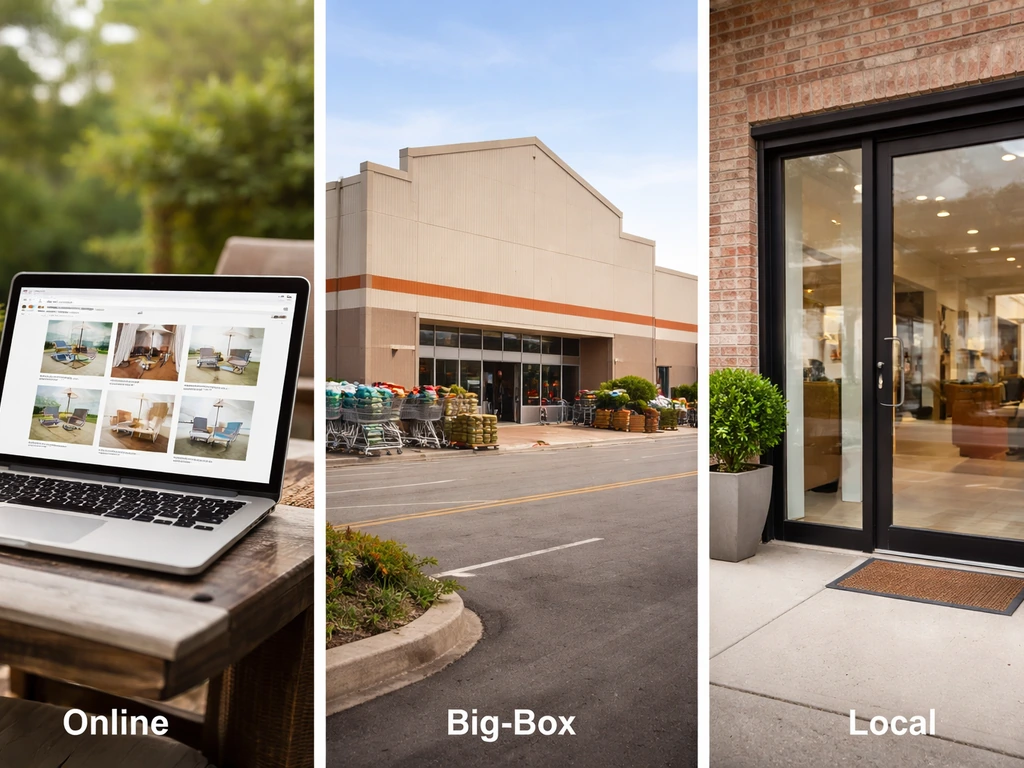
Each channel has a different strength, and the best shoppers use more than one.
Big-box retailers (Home Depot, Lowe's)
Home Depot and Lowe's carry the widest selection in a single place and both have price-match policies. They're especially good for mid-range sets in the $300 to $1,200 range. Home Depot's product pages let you filter by warranty length and rust resistance at browse time, which is genuinely useful. Lowe's has a dedicated returns page that spells out category-specific rules, so you know before you buy what your recourse is if something arrives wrong. Both stores offer buy-online-pick-up-in-store, which sidesteps bulky delivery fees entirely on smaller items.
Online marketplaces (Wayfair, Amazon)
Wayfair has the deepest online catalog and frequently runs sitewide sales with 20 to 40 percent off. Their standard return window is 30 days from delivery on unused items, but the fine print matters: check whether your specific item qualifies for free returns or whether you'd pay return shipping on a 200-pound sectional. Wayfair also separates their returns process from assembly and missing-parts issues, so if something shows up with a broken bracket, you're dealing with a different pathway than a standard return. Amazon's "FREE Returns" badge is product-specific, not universal, and for large outdoor furniture items, return shipping costs can be substantial. Always verify the returns badge and read the product-specific return policy before buying on Amazon.
Warehouse clubs (Costco, Sam's Club)
Costco is hard to beat for value on mid-to-upper-tier patio sets. Their return policy is famously generous (most members know they'll take almost anything back), but their customer service pages also route some product categories through technical and warranty services rather than straight returns. Know the path before you need it. Costco's patio furniture tends to be well-built for the price, and the sets are typically complete with all pieces included, which matters when you're comparing total cost.
Local options (furniture stores, outlet centers, Facebook Marketplace)
Local furniture retailers and outlet centers often carry brands you won't find at big-box stores and are more willing to negotiate on floor models. Facebook Marketplace and Craigslist are worth checking for lightly used sets at 50 to 70 percent of retail, especially if you can inspect in person. The obvious trade-off is no warranty and no returns, but on a durable material like cast aluminum or HDPE lumber, a two-year-old set in good shape is often a legitimate bargain. Big Lots is also worth a visit if there's one near you: their patio stock is limited but prices are genuinely low and they run frequent coupon promotions.
How to actually compare prices: per-piece, per-material, and total cost
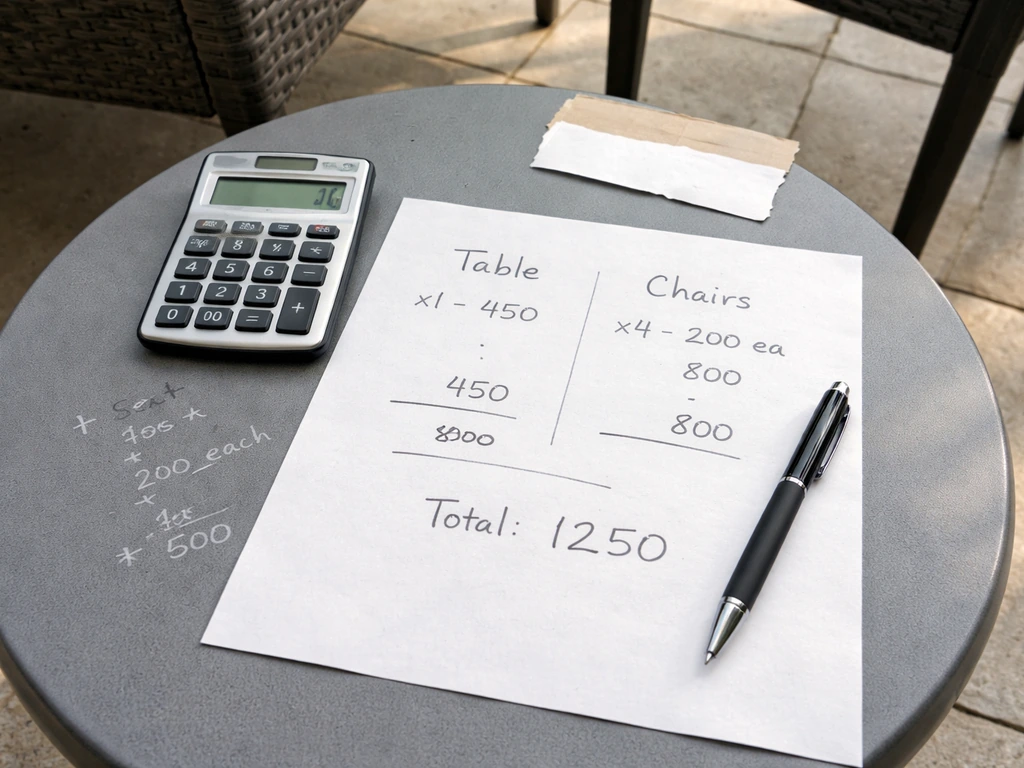
Sticker price comparisons are almost useless on their own because sets are configured so differently. A $699 five-piece set might include a table, two chairs, and two chairs with cushions. A $799 seven-piece set might include a loveseat, two chairs, two ottomans, a coffee table, and cushions. You can't compare those numbers without breaking them down.
- Count the usable seats, not the pieces. Divide the total price (including delivery and any required accessories like cushions or covers) by the number of seats. This gives you cost-per-seat, which is the most honest comparison unit.
- Add delivery and assembly to every option. A $600 set with $99 delivery and $75 assembly is $774. A $700 set with free shipping and free assembly is $700. The cheaper sticker price lost.
- Check whether cushions are included. Many sets, especially at lower price points, list the set price without cushions. Outdoor cushions for a six-piece set can run $80 to $250 extra.
- Factor in covers. A good outdoor furniture cover for a dining set runs $40 to $120. If one retailer bundles a cover and another doesn't, adjust your comparison accordingly.
- Look at the material category. Powder-coated steel rusts faster than aluminum. Resin wicker degrades in UV over time faster than HDPE lumber or Trex-style recycled materials. A cheaper material at the same price point is a worse deal over a five-year horizon.
- Note whether replacement parts are available. If a chair breaks in year two, can you buy a single replacement? Sets from warehouse clubs or major retailers are more likely to have parts available than off-brand sets from third-party Amazon sellers.
How to tell if a low price is actually a good deal
A low sticker price can hide poor durability, missing pieces, or a warranty that covers almost nothing. Here's how to qualify a deal before you commit.
Material and weather resistance
For most climates, aluminum frames (powder-coated) and HDPE/recycled plastic lumber are the best value in terms of longevity. Trex Outdoor Furniture, for example, offers a 20-year residential warranty on their lumber material, which signals real confidence in the product. Steel is cheaper upfront but rusts, especially in humid or coastal climates. Teak is durable but requires maintenance and commands a price premium. Resin wicker looks good but UV degrades it faster than the frame underneath it, so check whether the wicker or the frame is covered by the warranty and for how long.
Warranty coverage: what it actually means
Most patio furniture at big-box retailers carries a one-year manufacturer warranty, which you can filter for on Home Depot's and Lowe's product pages. But read the exclusion list. Lowe's patio furniture warranty documents, for example, specify how fading, discoloration, and rust-spotting on certain components are treated. Some warranties exclude cushion fabric fading entirely. Others cover defects under normal use but carve out rust or corrosion on hardware. A 20-year warranty like Trex's is meaningfully different from a one-year parts warranty. When comparing two sets at similar prices, the warranty length and its exclusions are a legitimate tiebreaker.
Returns and what happens when something goes wrong
Check the return window and conditions before you buy, not after. Wayfair's 30-day return window applies to unused items, and the process for missing or damaged parts runs through a separate channel from standard returns. Amazon's free returns badge is item-specific for large furniture, so verify it on the product page.
Amazon’s shipping service guides also note that bulky or large-item shipments can face different, tiered economics for shipping and returns compared with smaller items Amazon's free returns badge is item-specific for large furniture.
For Costco, most purchases are returnable at any time, but some product categories get routed through warranty services rather than a straight return. Lowe's and Home Depot both have category-specific rules published on their returns pages. Knowing this in advance means you're not stuck with a broken loveseat and no clear path to getting it resolved.
Size fit: measure before you shop
The number-one mistake I see is people buying a set that doesn't fit their space. A six-person dining set typically needs at least a 10-foot by 12-foot area to allow chair movement. A four-person conversation set with a coffee table usually needs 8 by 10 feet minimum. Patio furniture product pages list dimensions, but you need to account for walking clearance (about 36 inches around the set) and any gate or door widths the pieces need to pass through for delivery. If your gate is 36 inches wide and the table is 38 inches wide, you have a problem.
Your shopping checklist before you buy
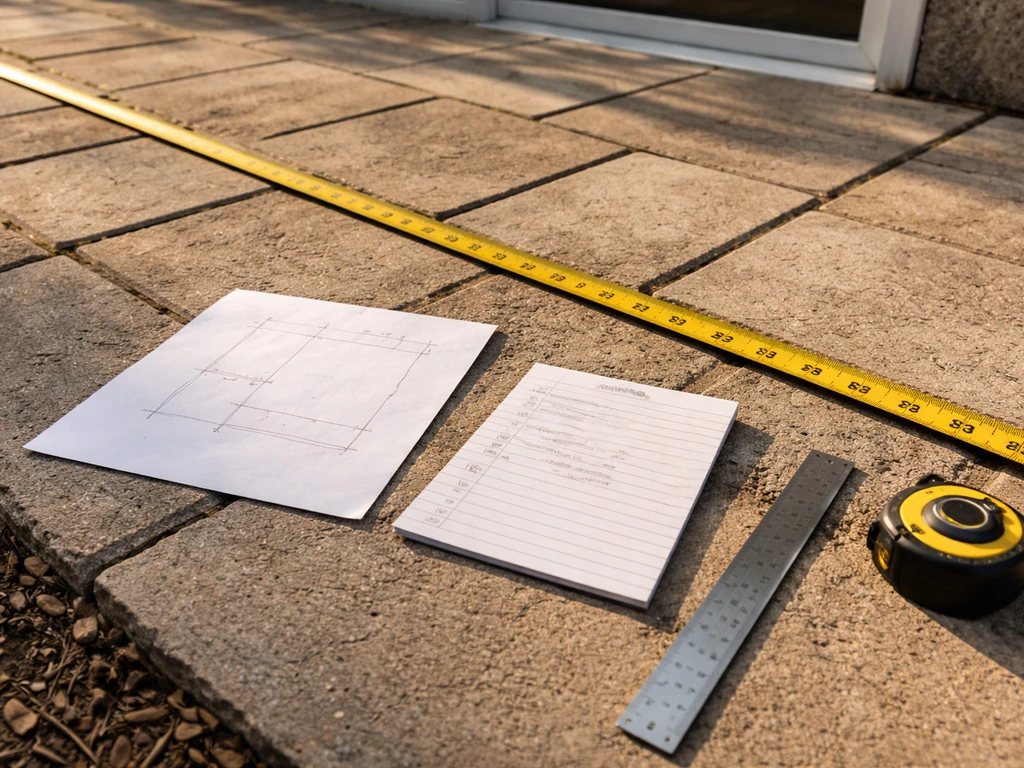
Use this before you commit to any purchase. It takes about five minutes and can save a lot of headache.
- Measure your patio space in feet and note any doorway or gate widths for delivery
- Write down how many seats you actually need at peak use (not average use)
- Decide on your priority material (aluminum, HDPE lumber, steel, teak, resin wicker) based on your climate
- Calculate cost-per-seat: total price plus delivery plus assembly plus cushions and covers, divided by number of seats
- Compare the same calculation across at least three retailers or channels before deciding
- Verify whether cushions, covers, and all hardware are included in the listed price
- Check the warranty length and read at least the top-level exclusions (fading, rust, hardware)
- Confirm the return window and whether return shipping is free or your cost
- For online orders, check whether the listing has a 'FREE Returns' badge or equivalent and verify it applies to your item
- Ask the retailer (in-store or via chat) whether replacement parts are available for the set
- If buying in-store, check online price before checkout and ask for a price match if it's lower
- Search for promo codes or member discounts (Costco membership, Wayfair email signup, Lowe's MyLowe's) before finalizing payment
Finding the best price on patio furniture is less about luck and more about running the same comparison process every time. If you’re trying to score the best deals on patio furniture near me, start by checking local listings and then verify delivery and return terms before you commit. If you want patio furniture best deals, focus on the timing and compare the total delivered cost, not just the sticker price.
Per-seat cost, total delivered cost, warranty quality, and return flexibility are the four numbers that separate a genuine deal from a good-looking sticker price. If you're also shopping specifically for cushions or trying to compare deals by location, those are separate searches worth doing alongside this one, since pricing and availability can vary significantly by region and product type.
If you want the best deals on patio cushions, compare total cost the same way, including shipping, returns, and whether you need replacement parts. Run the checklist, check at least three channels, and you'll know within an afternoon whether to buy now or wait for the next sale window.
FAQ
How do I calculate the true best price after shipping and assembly? If a site shows “free shipping,” can I trust it?
Use the delivery quote, not the free-shipping banner. For large sets, some retailers charge per piece or per box, and “assembly included” often applies only to certain models. When you compare totals, add (1) delivery fees, (2) assembly fees if you need them, (3) any required protection plan or handling charge, and (4) the cost-per-seat based on the actual seating pieces, not the headline set size.
What counts as an “unused” return for outdoor patio furniture, and what common return mistakes should I avoid?
For most major retailers, “unused returns” usually means the cushions and fabric are uninstalled and clean, and packaging must be intact for an easy return. If you open boxes, test parts, or set items outdoors, you can lose return eligibility or face restocking fees. Check the return conditions section, not just the return window length.
What should I do if my patio set shows up damaged or missing pieces, and is it better to return or request replacement parts?
If something arrives damaged, missing, or with wrong hardware, treat it as a parts issue first. Many brands route missing or broken brackets through a separate replacement-parts process, which can be faster than a full return but may require photos and model numbers. Save the original box and take clear pictures of shipping labels and the damage before installation.
When does the return window effectively start, and how can late delivery affect my ability to return?
Don’t rely on the return policy alone for timing. If your purchase arrives late in the season, you may have a short window to decide before you can confirm performance (rust spots, wobbly frames, cushion mildew from storage, etc.). Ask when delivery typically lands and whether the return window starts at order date, ship date, or delivery date.
How can I tell if a warranty is truly strong, or if it has exclusions that make it nearly useless?
If you need reliable long-term coverage, look for both the warranty term and the warranty scope by material and component. A set can have a long frame warranty but a short cushion fabric warranty, or it can exclude “surface rust” while covering structural corrosion. Use the warranty exclusions list as your tiebreaker, especially for steel in humid and coastal climates.
Can I get the best price on a patio set through price matching, and what details do I need to bring to make it work?
Yes, but only for the exact item and conditions. Price-match policies often require the same model number, color, and sometimes even the same quantity and delivery terms, and they may not apply if a competitor’s price is part of a bundle. Bring screenshots from the current sale page and verify whether the match includes shipping and any delivery surcharge.
How do I avoid the space-and-access mistake, especially with tables that barely fit through my gate or door?
Measure for access twice, especially for tables. Account for the narrowest pathway (gate, doorway, hall turns) and the largest single piece width or diagonal dimension, since chairs and smaller parts fit more easily. If the table width is close to the gate width, also account for the delivery team’s handling limits and the need to remove legs or cushions during passage (only if your set allows it).
When is it better to buy now versus wait for the next discount window, based on what I want (complete set vs flexible options)?
For planning, use a simple season timing rule: buy in the May to early June period if you want a complete set in a specific color and size, and expect fewer substitutions later. If you shop late summer clearance, be ready to mix pieces, accept floor-model differences, or pivot to a similar fabric or finish if the exact match is sold out.
If I find a great deal on Amazon or a marketplace, what’s the safest way to verify return and warranty coverage for large outdoor items?
If you’re buying on a marketplace platform, the best price can be undercut by return shipping or by a “returns not accepted” setting for that seller. For large furniture, confirm whether the listing includes return shipping coverage and whether the item is returnable if it arrives damaged. Also check whether assembly or warranty support is provided by the manufacturer or only through the marketplace seller.
What should I inspect before buying lightly used patio furniture (especially for 50 to 70 percent off deals) to avoid hidden problems?
For resale and used deals, prioritize structural materials and frame integrity. On cast aluminum or HDPE lumber, look for bent frames, cracked welds, rust through on steel hardware, and cushion mold or persistent odors that suggest moisture retention. Confirm that you can obtain missing pieces from the manufacturer if anything is missing, because “no returns” makes replacements your only option.