
Start by measuring your space, picking climate-appropriate materials, and buying during spring sale events (late April through May is peak discount season) to get the best combination of selection and price. That three-step foundation covers most of what goes wrong when people shop for patio furniture, they skip the tape measure, grab the wrong materials for their weather, and miss the sales window. Do all three right and you'll buy confidently without second-guessing yourself after delivery day. If you want the best way to buy patio furniture, follow these measuring, material, and sales-window steps before you order.
How to Shop for Patio Furniture: Step-by-Step Guide

Rowan Vale
29 Apr 2026

Start with your space and use case checklist

Before you look at a single product, treat your patio like an outdoor room and measure it completely. This isn't optional, eyeballing square footage is how people end up with a sectional that blocks the door or a dining set where nobody can push their chair back. Grab a tape measure and note the full length and width of your usable outdoor space, then map out where doors, steps, and fixed features (like a grill station or a post) sit.
Once you have the room dimensions, factor in clearance. For a dining setup, you want roughly 3 feet of clearance around the table so people can pull chairs out and move comfortably. In high-traffic pathways (like a route to the grill or a side gate), allow 30 to 40 inches. In lower-traffic zones, 24 inches works. Also measure chair pull-out specifically: you need at least 18 inches behind each chair at full extension before you hit a wall or fence.
Standard outdoor dining tables sit 28 to 30 inches tall, and matching chairs typically have a seat height of 17 to 19 inches. Those numbers sound interchangeable, but a 17-inch seat can feel uncomfortably low at a 30-inch table depending on your height, so measure the table's underside clearance and compare it to the chair seat height you're considering, not just the listed 'standard' figures.
Work through this checklist before you shop:
- Total patio dimensions (length x width in feet)
- Clearance space around the dining table (target: 3 feet on all sides)
- Walkway widths (30–40 inches for high-traffic paths, 24 inches minimum elsewhere)
- Chair pull-out depth (18 inches minimum behind each chair)
- Number of people you regularly seat vs. maximum guests you want to accommodate
- Table height and chair seat height compatibility (measure both, don't assume)
- Whether you need storage space for cushions, covers, or furniture during off-season
- Overhead clearance if you're adding a cantilever umbrella or pergola
- Umbrella table hole diameter if adding an umbrella (measure the center hole plus any O-ring or grommet)
- Fire pit clearance if relevant: minimum 24–36 inches from combustible walls depending on BTU rating
- Access for delivery (gate width, stairways, tight corners)
Choose the right materials for your climate
Material choice is where most people over-optimize for looks and under-optimize for where they actually live. What works beautifully in dry Arizona will rust, warp, or grow mold in a humid Florida backyard within a season. Match the material to your climate first, then worry about aesthetics.
Frame materials compared
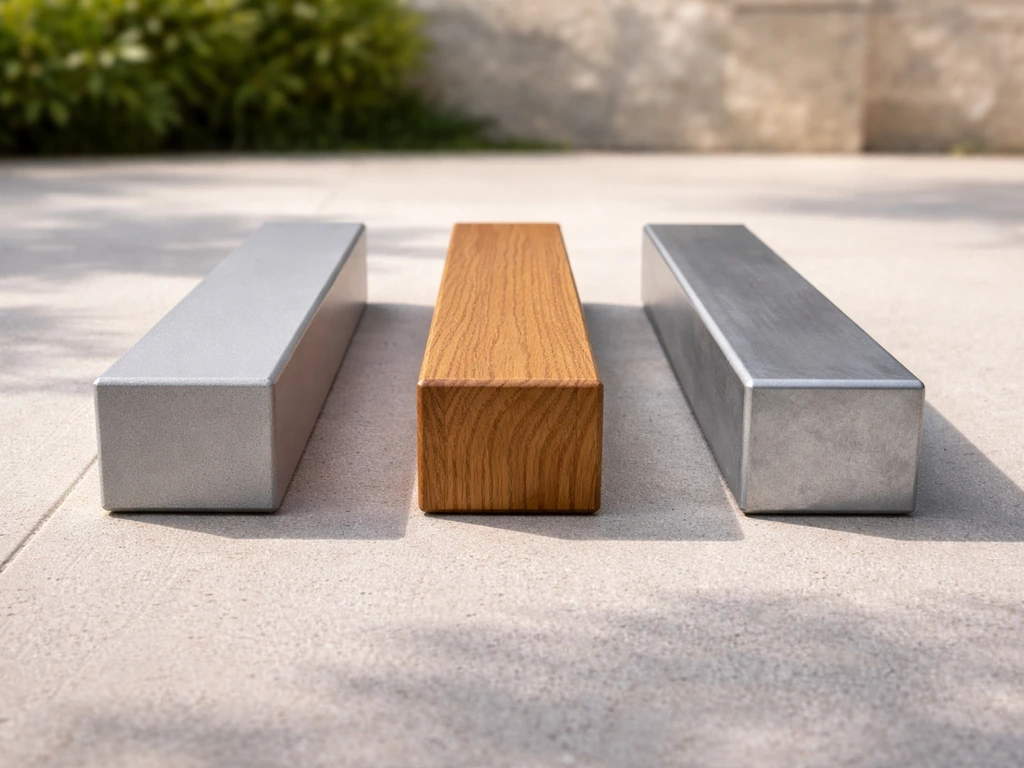
| Material | Best Climate | Durability | Maintenance | Weight |
|---|---|---|---|---|
| Powder-coated aluminum | All climates, especially humid/coastal | Excellent—rustproof by nature | Low—occasional wipe-down | Light, easy to move |
| Powder-coated steel | Dry to moderate climates | Good when coating is intact (60µm+ coat thickness) | Moderate—check for chips that expose bare metal | Heavy, very stable |
| Teak wood | All climates, excellent in humid/wet areas | Outstanding—naturally dense and oil-rich | Moderate—oil every 2–3 months during season to preserve color; grays naturally if left untreated | Heavy |
| Resin/HDPE wicker | All climates, ideal for rain and UV exposure | Very good—won't rust, rot, or fade quickly | Low | Moderate |
| Wrought iron | Dry climates only | Good structurally but will rust if finish is damaged | High—needs repainting and rust treatment over time | Very heavy, extremely stable |
| Natural rattan/wicker | Covered/sheltered outdoor spaces only | Poor in rain/humidity | High | Light |
If you're in a humid, rainy, or coastal environment, powder-coated aluminum or teak are the two most forgiving choices. Aluminum is rustproof by nature (not just by coating), and teak's natural oils resist rot and insects for decades. For powder-coated steel, the coating is doing all the protective work, look for a minimum coating thickness of around 60 microns. Thinner coatings are a common cost-cutting move on budget pieces and will chip and rust within a year or two.
Cushion fabrics: what 'all-weather' actually means
The phrase 'all-weather cushion' gets thrown around loosely. What it should mean is solution-dyed acrylic fabric (brands like Sunbrella or Outdura are the industry benchmarks), where the color is integrated into the fiber itself rather than printed on the surface. This matters because surface-dyed or printed fabrics fade fast under UV exposure, think of it like the difference between a radish (color only on the outside) versus a carrot (color all the way through). Solution-dyed acrylic is also resistant to mold and mildew, which is critical anywhere with humidity or frequent rain.
Solution-dyed polyester is the step down, still colorfast, UV-resistant, and mold-resistant, but not quite as durable long-term as acrylic. Budget cushions using standard polyester or printed fabric will fade noticeably after one season in full sun. Check the fabric spec before you buy, not after. Sunbrella typically carries a 3-year fabric warranty; generic outdoor fabrics often get 1 year or nothing.
How to evaluate quality, size, and comfort before buying

Quality is harder to evaluate online, which is why I always recommend touching at least a few pieces in person, even if you end up ordering online for a better price. Here's what to check whether you're in a showroom or reading a product listing closely.
Frame and construction checks
- Grab the frame and try to rack it side-to-side—quality frames won't flex. Flex equals future wobble.
- Look at the joinery on wood pieces: mortise-and-tenon construction (a peg fitting into a matching hole) is the strongest approach for outdoor wood furniture and a sign of quality manufacturing.
- Check welding on metal frames—clean, consistent welds with no gaps or rough spots. Rough or spotty welds are stress points.
- Inspect hardware: stainless steel or marine-grade bolts and screws resist rust. Zinc-plated hardware will corrode quickly in damp climates.
- On powder-coated pieces, look for even coating coverage with no thin spots, bare edges, or bubbles—especially at corners and joints where coating tends to be thinner.
- On wicker/resin weave pieces, check that weave is tight with no loose ends and that the frame underneath the weave is metal (not hollow plastic rod).
- Sit in the chairs and rock slightly—there should be zero creaking or lateral movement.
Cushion and comfort checks
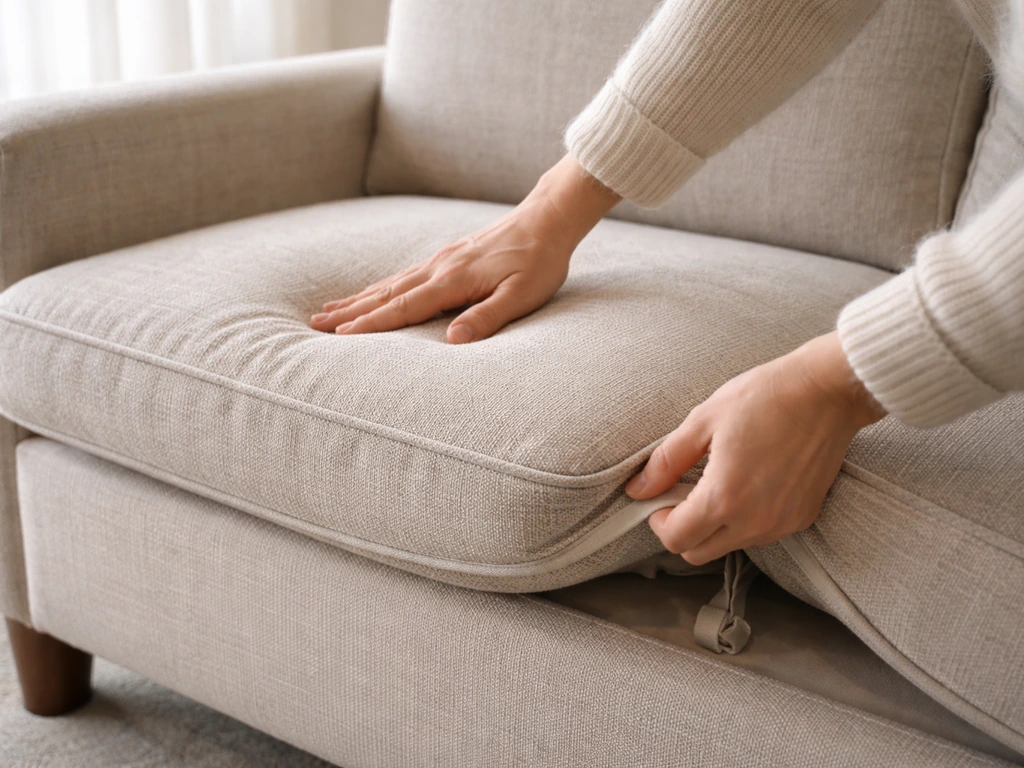
- Press the cushion in the center—it should have density and spring back. Thin, floppy cushions (under 3 inches) lose their shape quickly.
- Check whether cushions have tie-downs or attachment loops so they don't blow off in wind.
- Verify the cushion cover is removable and machine-washable, or at minimum states it's spot-clean only (so you know what you're getting into).
- Sit fully in the chair and check that the seat depth supports your thighs without cutting off circulation—dining chairs typically run 16–18 inches deep, lounge chairs much deeper.
- Check armrest height: too high forces your shoulders up; too low offers no support.
Dimensions to verify for every piece
- Table height (28–30 inches for standard dining, 36 inches for bar/counter height, 16–18 inches for coffee/cocktail tables)
- Chair seat height against the specific table you're pairing it with—don't assume a 'set' is always correctly proportioned
- Table width: 36 inches wide is comfortable for two-sided dining; 42–48 inches allows centerpiece items without crowding
- Sectional or sofa depth: 30+ inches of seat depth means you'll want throw pillows behind you for upright sitting—factor that in
- Folded or stacked dimensions if storage space is limited
Pick a style and set that matches how you actually use your space
Retailers love showing styled patios that look perfect but don't reflect how most people use their outdoor spaces. Match the set type to your real lifestyle, not an aspirational one.
| Set Type | Best For | Typical Size Needed | Watch Out For |
|---|---|---|---|
| Bistro set (2 chairs + small table) | Small balconies, morning coffee spots, couples | 6x6 feet minimum | Too small if you ever want to dine a full meal or host guests |
| Dining set (table + 4–8 chairs) | Families, frequent entertainers, covered patios | 12x12 feet for a 6-person set with clearance | Chair pull-out clearance—measure this before buying |
| Conversation/chat set (loveseat, chairs, coffee table) | Relaxed lounging, drinks with friends, no full meals | 10x10 feet minimum | Low tables aren't for eating—don't buy this expecting a dining experience |
| Sectional/lounge set | Larger patios, dedicated lounging area, entertaining | 14x14 feet or more for L-shapes | Very heavy to move; confirm you want it in one permanent spot |
| Fire pit table set | Year-round use, evening gatherings, cooler climates | Patio must allow 24–36 inch clearance from combustible walls | Check BTU rating and local codes; propane vs. natural gas hookup |
| Bar/counter height set | Standing-height surfaces like an outdoor kitchen counter | Same footprint as dining but taller chairs | Hard to find matching stools; confirm bar height (36") vs. counter height (34") |
If you eat outside regularly, prioritize a dining set over a conversation set regardless of how good the lounge set looks in the showroom. If you mostly sit outside in the evening with drinks, a conversation set with a fire pit table is far more functional than a dining setup you'll barely use. Be honest about your actual habits.
Where to shop: online vs. in-store vs. warehouse clubs
Each channel has real advantages and real trade-offs. Knowing which to use for what saves you time and money. If you want the best place buy patio furniture, start by comparing online selection with local showroom comfort checks.
In-store shopping (Home Depot, Lowe's, Walmart, Big Lots)
In-store is the best way to evaluate comfort, frame quality, and actual cushion thickness, which you simply cannot do from a product photo. Home Depot and Lowe's carry a solid mid-range selection from late February through August, with floor samples you can actually sit in. Walmart stores carry patio furniture seasonally and the in-store selection is narrower than what's available on Walmart.com, so if you want a specific piece from Walmart, check online inventory rather than assuming the store carries it. Big Lots is worth checking for aggressive clearance pricing, especially in late summer.
Online shopping (Wayfair, Amazon, Walmart.com, Home Depot online)
Online gives you dramatically wider selection and easier price comparison, but it requires extra diligence. If you are trying to decide where to buy, browsing discussions for the best place to buy patio furniture reddit can help you compare real-world picks and common complaints before you order.
If you want the best place to buy patio furniture online, use the wider selection and price comparisons of online shopping as your advantage, but keep diligence high by verifying outdoor-rated specs before you order. Always verify that any product is explicitly listed as outdoor-rated, some sellers list furniture in outdoor categories that is not actually weather-resistant (Wayfair's own warranty documentation even notes that certain furniture products are not intended for outdoor use).
Read the material and frame specs carefully, not just the product name. Check that cushion fabric is identified as solution-dyed, and confirm warranty coverage before ordering. Wayfair, Amazon, and Walmart. com are all worth comparing side-by-side for price on the same or equivalent pieces, prices for the same SKU can vary 20 to 30 percent across platforms.
If you want the best online store for patio furniture, compare options like Wayfair, Amazon, and Walmart. com side-by-side and confirm each item is truly outdoor-rated.
Warehouse clubs (Costco, Sam's Club)
Costco in particular punches above its weight for patio furniture value. Costco's outdoor sets often include better frame construction and thicker cushions than you'd find at the same price point at mass retailers, and many Costco patio purchases come with manufacturer-style care documentation. The catch is limited SKU selection and the fact that popular sets sell out fast, sometimes by May. Costco's return policy is among the most generous in retail, which meaningfully reduces your buying risk. Check Costco.com regularly starting in March and be ready to buy quickly when you see something you like because restocks aren't guaranteed.
Specialty and direct retailers
For teak specifically or higher-end outdoor furniture, specialty retailers and direct-to-consumer brands tend to offer better construction, more transparent material specs, and longer warranties than mass-market channels. If you're specifically shopping for teak patio furniture, it's still worth using these specialty retailer tips to find the best place to buy teak patio furniture for your budget and climate. The trade-off is price, you're paying a meaningful premium. If you're buying teak, brands that specialize in it will be more transparent about grade, joinery type, and oil/maintenance requirements than a general retailer will be.
How to find the best deals, sales timing, and clearance
Patio furniture follows a predictable markdown cycle every year. Understanding it means you can plan your purchase around a sale rather than paying full retail.
The annual sale calendar
- Late April to Memorial Day (late May): Peak spring sale season. Retailers run their biggest outdoor events of the year. Right now (late April 2026) Walmart's Patio and Garden Event is running discounts of up to 50% off through April 30—this kind of promotion is typical of what every major retailer runs in this window.
- Memorial Day weekend: One of the single best weekends to buy patio furniture. Nearly every major retailer (Home Depot, Lowe's, Wayfair, Walmart, Costco) runs sitewide or category-wide outdoor promotions.
- Fourth of July: A secondary discount window—not as deep as Memorial Day but worth checking if you missed the spring events.
- Labor Day (early September): Clearance season begins. Retailers start discounting existing inventory to make room for fall and holiday merchandise. Discounts can be steep (40–60% off) but selection is thinning fast.
- Late September through October: Deepest clearance pricing of the year at Home Depot, Lowe's, Big Lots, and Walmart. You'll find the lowest prices here, but popular styles and sizes will already be gone.
- Black Friday / Cyber Monday: Some outdoor furniture deals appear, but selection is limited and focused on whatever inventory remains.
Price comparison tactics that actually work
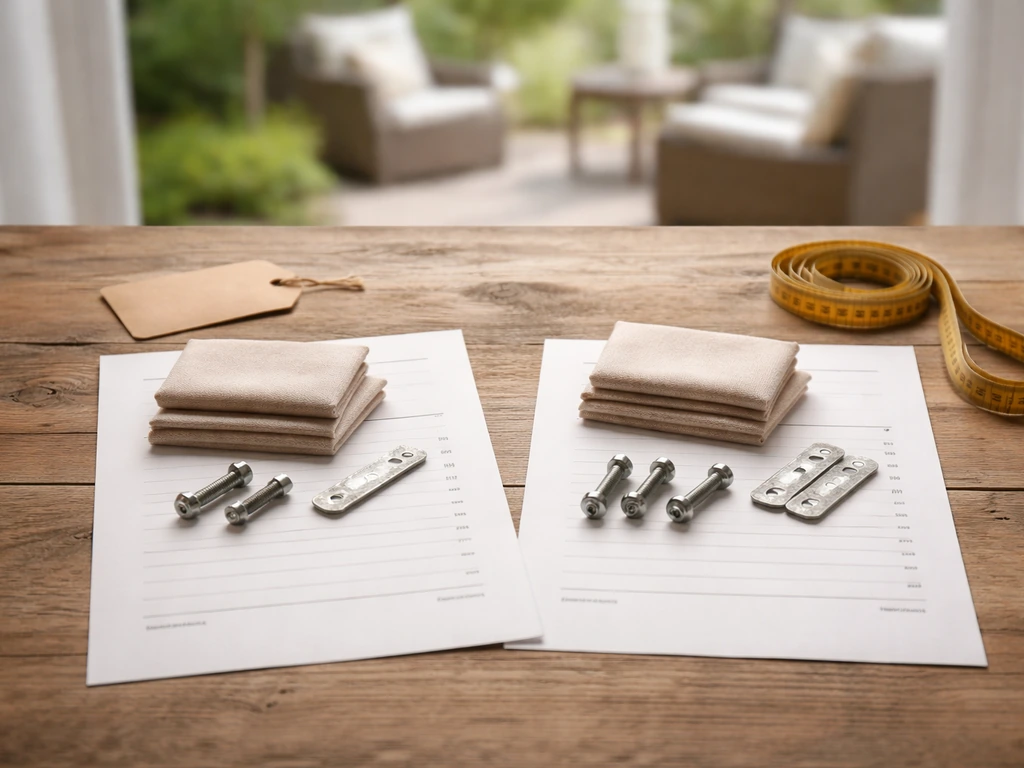
Don't just compare the listed price, compare what's included. A set that's $200 cheaper but doesn't include cushions, or includes thin unbranded cushion fabric, can easily cost more once you add quality cushions separately. Use Google Shopping to cross-check prices across Home Depot, Walmart, Wayfair, and Amazon simultaneously. Many retailers price-match competitors, so if you find the same set cheaper elsewhere, ask before you check out (Home Depot and Lowe's both have price-match policies). For Costco, there's no traditional price-match, but Costco's own pricing is usually competitive enough that the comparison is less necessary.
For deeper discounts, check floor sample sales at local furniture stores and Home Depot/Lowe's garden centers toward the end of the season, floor samples are often sold at 30 to 50 percent off and have been tested for stability in real conditions (just inspect for any finish damage before buying).
Delivery, assembly, returns, and warranty, verify before you buy
This is the step people skip and then regret. Getting all the details on delivery, assembly, returns, and warranty before you click 'order' saves you a lot of pain.
Delivery
- Confirm whether delivery is curbside (they drop it at the curb), threshold (inside the front door), or white-glove (they place it where you want it and sometimes assemble it). For large sectionals or heavy dining sets, curbside means you're hauling heavy boxes yourself.
- Measure your gate, side yard access, and any doorways the boxes need to pass through before ordering—large furniture boxes can be 80+ inches long.
- Inspect every box before signing anything. Note any exterior damage on the delivery receipt. If a box looks crushed, photograph it and note 'damage to packaging' on the receipt before the driver leaves.
- If a piece arrives damaged, report it within 24–48 hours to the retailer—most policies require prompt reporting. Photograph everything before unpacking further.
Assembly
- Check whether assembly is required and how involved it is before ordering. Some sectionals and dining sets take 2–3 hours and two people.
- Look for hardware quality in the listing or reviews—cheap zinc hardware stripped during assembly is a common complaint on budget pieces.
- Keep all hardware bags and instructions until you've confirmed every bolt and joint is secure after first use.
Returns
Return policies vary significantly and matter a lot for large furniture purchases. Costco's return policy is one of the most generous available and allows returns on most items without a time limit (verify current terms on their site since policies can update). Home Depot and Lowe's typically offer 90-day return windows on most outdoor furniture.
Walmart's return policy can vary by item and seller, for Walmart Marketplace third-party sellers, you may be directed to work with the manufacturer rather than Walmart directly. Wayfair generally allows returns within 30 days but typically requires you to pay return shipping on large items, which can be expensive. Know the window, know who pays for return shipping, and keep all original packaging until you're certain you're keeping the piece.
Warranty, what to actually check
Outdoor furniture warranties are almost always split by component. A typical warranty might cover steel frames for 1 year against structural failure, powder-coated aluminum frames separately (sometimes longer), and cushion fabric anywhere from 1 to 3 years depending on whether it's Sunbrella (usually 3 years) or a generic fabric (often 1 year or nothing).
Ask specifically about what voids the warranty, leaving cushions out in rain year-round often does. Also confirm whether replacement parts (cushions, hardware, sling fabric) are available to purchase separately, because a quality frame that you can re-cushion after 5 years is far better value than a cheap set you have to replace entirely. Sunbrella states that its [five-year limited warranty for upholstery fabrics](https://pressroom. sunbrella.
com/news/view/109/glen-raven-expands-on-industry-leading-warranty-for-sunbrella-fabrics) was expanded to include labor coverage for the first three years, in addition to fabric replacement.
One final thing to verify for online purchases: make sure the product's warranty explicitly covers outdoor residential use. Some warranty documents specifically exclude items that were listed in outdoor categories but are not rated for outdoor exposure, this comes up more often than you'd expect on general-purpose marketplaces. If the listing doesn't clearly state the warranty covers outdoor use, email the seller and get confirmation in writing before you buy.
FAQ
How do I choose the right size patio dining set if my outdoor space has an angled layout or an outdoor rug?
Measure the usable footprint you can actually navigate, then subtract the rug overlap (or choose a rug first and measure around it). For angled corners, use the longest chair pull-out path you have clearance for, then confirm you still have room to open any nearby doors or drawers when chairs are fully extended.
What should I look for in patio furniture frames to avoid rust, wobble, or early failure?
Check how the frame is joined (welded seams versus only fasteners), look for consistent paint or powder coverage over weld points, and inspect for motion at the connection points while you push and pull gently. If you are buying online, look for close-up images of joints and thickness mentions rather than relying on overall material labels.
Is it better to buy furniture cushions pre-installed or buy cushions separately?
If you live where sun and rain are intense, buying cushions separately can be safer because you can upgrade to solution-dyed acrylic fabric and confirm the cushion thickness. Pre-installed cushions are fine for mild climates, but you should verify cushion brand, fabric type, and whether the covers are removable for cleaning.
How do I tell whether a “weather-resistant” patio set can really handle my winter conditions?
Look for explicit outdoor ratings and test notes that mention cold exposure and water resistance, not just “outdoor” in the title. Also confirm what happens when cushions stay wet (warranties often exclude long-term rain-soaked storage), and plan storage or breathable covers if your area sees freezing temperatures.
Should I prioritize aluminum, teak, or synthetic wicker for my specific climate?
For consistently humid or coastal locations, powder-coated aluminum and teak tend to stay serviceable longer, while some wicker finishes can degrade if the weave is exposed for months. In arid climates, you can get good results from more materials, but UV fading becomes the main risk, so focus on solution-dyed fabric and UV-stable coatings.
What’s the difference between solution-dyed acrylic and “all-weather” claims I see on listings?
“All-weather” alone is marketing, solution-dyed acrylic is a specific manufacturing method where color runs through the fiber. When shopping, look for fabric descriptions that explicitly say solution-dyed or acrylic spun with colorfast performance, and be cautious with listings that only say “UV resistant” without naming the fabric type.
How can I compare two patio sets online when product photos make everything look equally thick?
Use the listed measurements for cushion thickness (inches) and seat depth, then cross-check with the warranty length for cushion fabric. If thickness is not specified, treat the set as higher risk and prioritize listings that provide fabric composition and removable-cover details.
What should I do before ordering patio furniture online to avoid missing the return policy?
Confirm the return window in days, who pays return shipping, and whether returns require original packaging. Keep screenshots of the exact listing and warranty terms, because some marketplaces change terms per seller, and you will want that proof if the item arrives damaged.
How do I know if a patio furniture warranty is actually useful?
Check which components are covered and for how long, then look for exclusions that affect real use (for example, cushions left out in rain or improper cover use). Also verify whether replacement cushions and sling fabric can be purchased separately, because the ability to re-cushion can extend the life of a good frame by years.
Are floor sample or clearance patio sets a good deal, or are there risks?
They can be excellent value, but inspect finish damage carefully, especially on powder-coated frames and cushion fabric seams. Ask whether samples have been stored covered or outdoors, and confirm whether the warranty still applies after floor display use.
What delivery issues should I plan for, especially with large sets or stairs?
Before ordering, confirm whether delivery includes room-of-choice placement or curbside only, and whether the carrier handles stairs, gates, or assembly. If your patio has tight turns, measure door widths and stair landing sizes, then choose a set with components that can be disassembled for transport if needed.
Can I protect patio furniture enough with covers, or do I still need storage?
Covers help, but they do not replace dry storage if your climate is rainy or freezes, because trapped moisture can cause mildew on cushions and hardware. Use breathable covers designed for outdoor use, keep them dry and fitted, and consider storing cushions indoors during extended wet or winter periods.
How do I handle buying clearance sets when colors are seasonal and models sell out quickly?
Buy the set you can confirm fits your space and climate first, then match color second, because discontinued patterns can be hard to replace. If possible, ensure spare cushion options are available, so that if you need replacement later you are not locked into a sold-out fabric.