
Your best bets for donating patio furniture are Habitat for Humanity ReStores, Goodwill, and the Salvation Army. All three accept outdoor furniture in good condition at many locations, and some offer free pickup for large items. The catch is that acceptance rules vary by chapter, and furniture with rust, mildew, stains, broken frames, or missing structural pieces gets turned away almost everywhere. Habitat Broward’s ReStore donation guidelines list common exclusion criteria for outdoor furniture, including furniture with odors, pet hair, and rips, stains, or tears Habitat Broward ReStore Donation Guidelines. Call ahead, send a photo, and confirm pickup or drop-off availability before you load anything into a truck.
Where to Donate Patio Furniture: Local Options Fast

Rowan Vale
28 Jun 2026
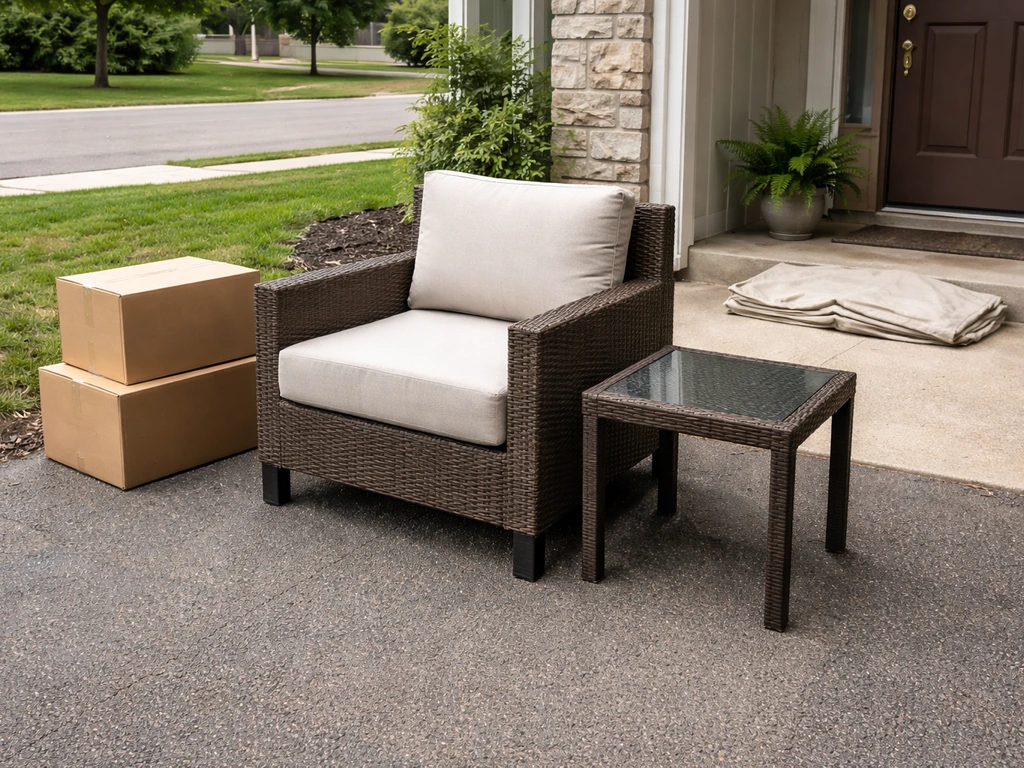
Best places to donate patio furniture locally
These are the organizations most likely to say yes to outdoor furniture, listed by how consistently they accept it across locations:
- Habitat for Humanity ReStore: Widely regarded as the most reliable option for patio and outdoor furniture. Many ReStores explicitly list 'patio, outdoor furniture' as an accepted category. They're resale shops, so items need to be clean, functional, and ready to sell as-is. Find your nearest location at habitat.org.
- Goodwill: Accepts furniture at many (not all) locations, including large items at select stores. Rules vary significantly by chapter. Some Goodwill stores have donation bins that won't accommodate large pieces; others handle bulky furniture directly. Always confirm with your local store.
- Salvation Army: Accepts gently used furniture and offers pickup in many areas through satruck.org. Items that are worn, stained, or broken are explicitly turned away, since the organization doesn't have resources to restore donations.
- arc Thrift Stores (Colorado and select markets): Explicitly schedules pickup for large furniture and other bulky items. If you're in their service area, this is a strong option with a straightforward scheduling process.
- Purple Heart Foundation: Offers donation pickup in many areas, including furniture. Availability depends on your zip code, so check their local pickup page or call ahead.
- Vietnam Veterans of America (VVA): Runs vvapickup.org and accepts 'small furniture' in many pickup zones. Larger patio sets may be categorized differently, so confirm what they'll take from your area.
- Housing Works (New York-area): Offers a dedicated furniture pickup service. If you're in or near NYC, this is worth checking directly at housingworks.org.
- Local shelters, senior centers, and faith organizations: These often accept donated furniture directly and may be more flexible on condition than resale-focused nonprofits. A quick call to a local women's shelter, transitional housing program, or church can get furniture placed the same day.
For truly local options beyond the national chains, search '[your city] furniture donation' or '[your city] community free store' to surface neighborhood reuse programs, Buy Nothing groups, and mutual aid networks that often move furniture faster than any thrift chain.
How to check donation acceptance rules before you go
Every organization has its own standards, and the national websites are often vague. The real rules live at the chapter level. Here's what to verify before showing up with a truckload of chairs:
Condition standards that come up everywhere
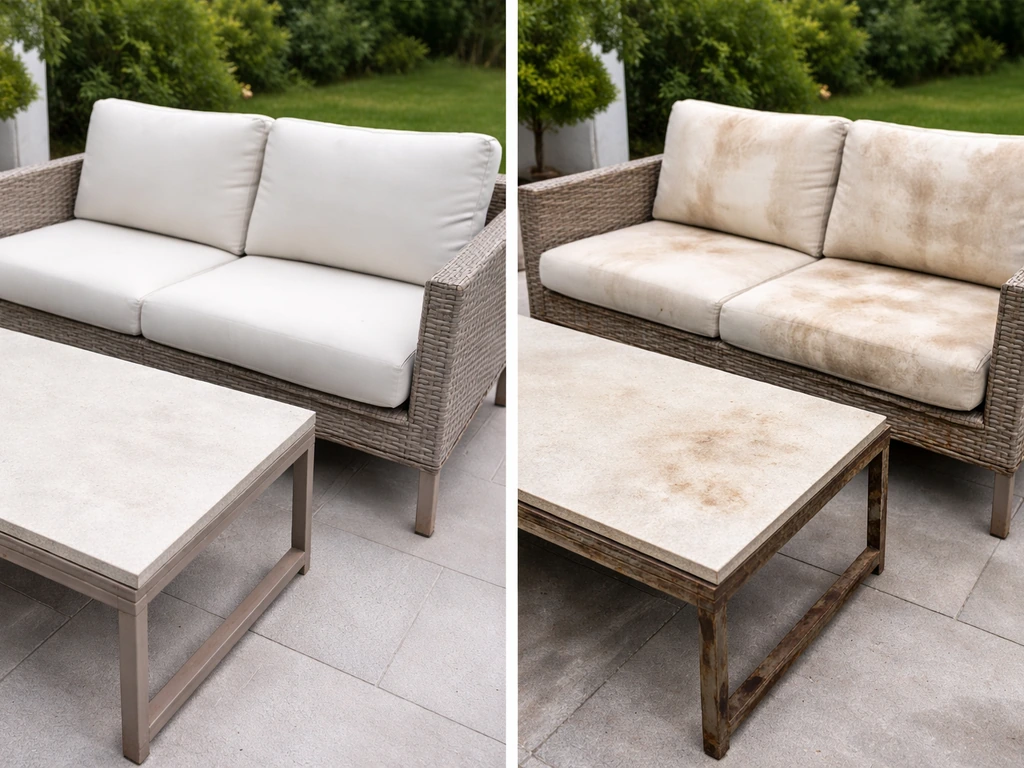
- Stains: Visible staining on cushions, frames, or tabletops is a common rejection reason at Goodwill, Salvation Army, and Habitat ReStores alike.
- Rust: Structural rust on metal frames is typically disqualifying. Light surface rust that can be wiped off may slide through, but don't assume.
- Mold, mildew, and odors: Habitat ReStores are explicit about this. Items with any odor, mildew smell, or signs of rot will be turned away. This is non-negotiable at most locations.
- Missing or broken parts: Furniture needs to be intact and functional. A table with a missing leg or a chair with a cracked frame won't be accepted. Portland and Santa Barbara ReStores both specifically list 'broken or missing pieces' as exclusions.
- Pet hair: Surprisingly common rejection reason, especially for cushioned pieces. Some ReStores name it explicitly in their guidelines.
- Fading and excessive wear: Severe sun fading or sagging on cushions tends to disqualify items, since they can't be resold easily.
- Particleboard or pressboard materials: Some ReStores won't take furniture built from these materials because they don't hold up in resale and can harbor moisture damage.
What to ask when you call
Keep it short and specific. Say something like: 'I have a six-piece metal patio set, about X years old. The frames are in good shape, no rust, cushions are clean but slightly faded. Do you accept patio furniture, and is there a size or weight limit?' That covers the key variables in under 30 seconds. If they ask for photos, that's actually a good sign because it means they're genuinely evaluating it rather than giving a blanket yes or no. If you need a patio swing pickup today, confirm the pickup rules first so you do not waste a trip or get turned away.
Where to find pickup vs. drop-off options
Pickup is available from several national organizations, but it's not guaranteed in every zip code. Here's how to sort it out quickly:
| Organization | Pickup Available? | How to Schedule | Notes |
|---|---|---|---|
| Salvation Army | Yes, in many areas | satruck.org or call local | Zip-code dependent; call if online scheduler doesn't show your area |
| Habitat for Humanity ReStore | Varies by chapter | Contact local ReStore directly | Some chapters require photos when requesting pickup; acceptance is confirmed on arrival |
| arc Thrift Stores | Yes (select markets) | arcthrift.us | Explicitly for large furniture; availability can change so verify current status |
| Purple Heart Foundation | Yes, in many areas | Local phone number or website | Pickup process varies; call to confirm furniture is included in your area |
| VVA (Vietnam Veterans) | Yes (small furniture) | vvapickup.org | Larger outdoor sets may not qualify; confirm by item type |
| Housing Works | Yes (NYC area) | housingworks.org | Dedicated furniture pickup program |
| Goodwill | Rarely / varies | Call local store | Most Goodwill locations do not offer pickup; exceptions exist by chapter |
If pickup isn't available in your area, drop-off is straightforward for most locations. Goodwill and Salvation Army both have staffed donation bays at many stores. For Habitat ReStores, call ahead to ask about their drop-off hours since some locations are appointment-only for furniture. When you do drop off, bring the furniture clean, dry, and disassembled if possible. Don't assume staff will help you unload a heavy table set without warning them first.
Chain and nonprofit options by area
National chains are a good starting point, but local nonprofits often move furniture faster and with fewer restrictions on condition. Here's how to think about each category:
National thrift chains (Goodwill, Salvation Army, arc Thrift)
These are the most accessible options because they have physical locations in most markets. The trade-off is that they operate as resale businesses, so their condition standards can be strict. Goodwill's acceptance policies vary so much by chapter that what's accepted in Connecticut may be turned away in Pennsylvania. Does Goodwill take patio furniture, and what condition do they require? The chapter-by-chapter acceptance rules can vary, so you should verify before donating Goodwill's acceptance policies vary. Always go to your specific local chapter's website (or just call) rather than relying on goodwill.org's national guidance.
Habitat for Humanity ReStores
This is consistently the strongest option for patio furniture specifically. ReStores are home improvement and furniture resale shops, so outdoor furniture fits naturally into their inventory. The Portland Region ReStores, for example, explicitly list patio and outdoor furniture as accepted, while also being clear about their exclusions. Find your nearest ReStore using the locator at habitat.org and call them directly since experience and expectations can vary significantly between chapters.
Housing, transitional, and community organizations
Transitional housing programs, veterans' housing organizations, refugee resettlement agencies, senior centers, and domestic violence shelters often accept furniture directly because they're furnishing actual living spaces, not running a retail operation. They tend to be less fussy about cosmetic imperfections as long as pieces are structurally sound and clean. Search for local housing nonprofits or call 211 (the social services helpline available in most U.S. areas) and ask them to direct you to organizations that accept furniture donations.
Faith organizations and community free stores
Churches, mosques, synagogues, and community centers sometimes have free stores or coordinate furniture distribution to families in need. These vary wildly by community, but they can be the fastest path to getting furniture out of your hands the same day. A quick search or a phone call to a few local congregations is worth 10 minutes of your time.
How to prepare patio furniture for donation
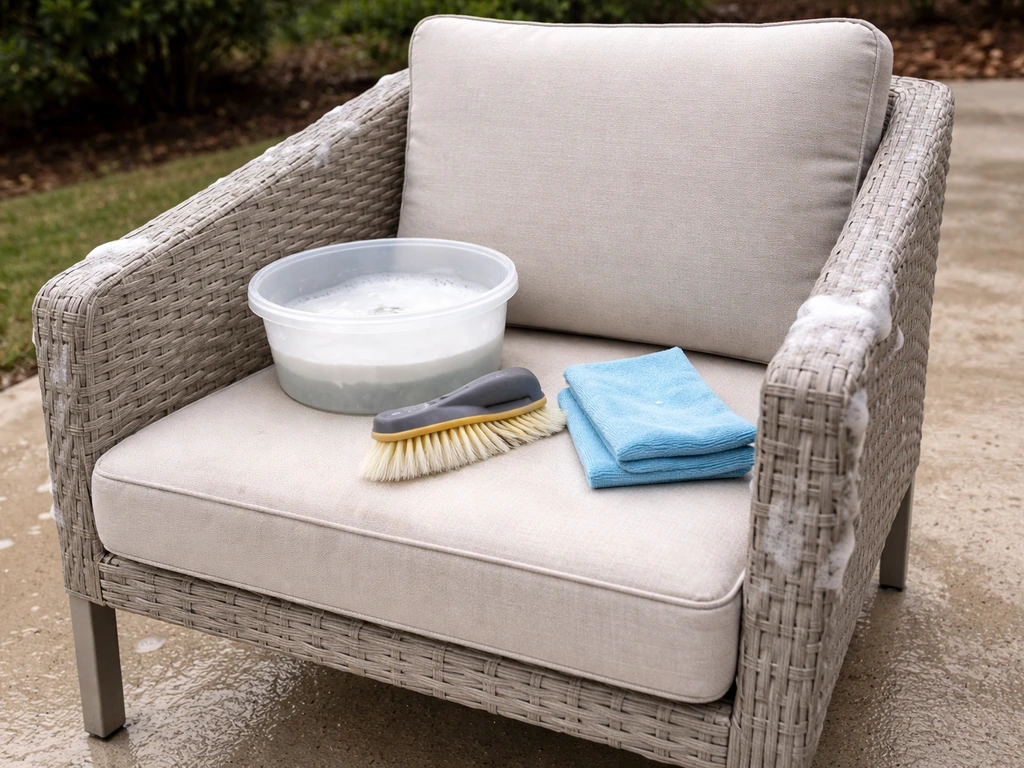
Prep work is what separates accepted donations from rejected ones. Spending 30 minutes cleaning before you haul anything out saves you a wasted trip. Here's exactly what to do:
- Clean everything thoroughly. Scrub frames, tabletops, and chair surfaces with soap and water. Use a mild mildew remover on any spots. Cushions should be washed or wiped down and fully dried before donation. Any lingering smell or damp will get the item turned away.
- Dry completely before transport. Don't wrap or bag damp furniture. Sealing in moisture is how you create a mildew smell between your house and the drop-off location.
- Do minor touch-up repairs. Tighten any loose bolts, replace obvious missing hardware if you have it, and wipe off light surface rust with a rust remover or fine-grit sandpaper. You're not restoring it, just making it clearly functional.
- Take photos before you go. Several ReStores and pickup services ask for photos when you schedule. Having clear, well-lit photos of each piece on hand (including close-ups of any wear) speeds up the approval process and prevents surprise rejections on arrival.
- Measure dimensions and note materials. Know the dimensions of your largest piece and the materials (wrought iron, aluminum, teak, rattan/wicker, plastic, etc.). Some ReStores decline particleboard or certain materials. Having this info ready makes the phone call faster.
- Disassemble if it helps transport. If your set breaks down into manageable pieces, take it apart. It makes loading easier and reduces the chance of damage in transit. Keep all hardware together in a labeled bag taped to the piece.
- Protect surfaces during transport. Use moving blankets, old towels, or cardboard to keep chairs and tables from scratching each other. Arriving with a damaged piece because it was loaded carelessly is the worst-case scenario.
What to do if no one will take it
Sometimes furniture genuinely can't be donated, whether because of condition issues or because no local organization has capacity. You still have good options for getting rid of it responsibly.
List it as free online
Facebook Marketplace free listings, Craigslist free section, Nextdoor, and Buy Nothing groups on Facebook move furniture fast when it's listed as free pickup. Post clear photos and note any imperfections honestly. People will often show up the same day. This is a solid middle ground between donation and disposal, and it keeps usable furniture out of the landfill.
Municipal bulk trash and bulky item pickup
Most cities and counties have a bulky item pickup program separate from regular trash collection. You schedule a pickup (often online or by phone), place items at the curb on a designated day, and the city hauls them away. If you want patio furniture picked up today, confirm same-day availability when you call and ask about any size limits or loading requirements pickup. Some municipalities sort bulky pickups for recycling rather than straight landfill, so it's more responsible than it sounds. Search '[your city or county] bulky item pickup' to find your local program and scheduling process.
Metal recycling centers
If your patio furniture is primarily metal, aluminum or steel frames can go to a scrap metal recycler. You probably won't get much money for it, but it keeps the material in use rather than in a landfill. Search for local scrap yards and call ahead to ask what they accept and whether you need to separate materials.
Junk removal services
Services like 1-800-GOT-JUNK or local independent junk haulers will take anything, including furniture in any condition. It costs money (typically starting around $100 to $150 for a single large item), but if you're clearing out a full patio set quickly and have no other path, it's a clean solution. Some haulers will donate or recycle usable pieces themselves, so it's worth asking what happens to items they pick up.
If you're in the middle of a full outdoor furniture refresh and need to time your donation removal with a new purchase arriving, it's worth coordinating the two. Some retailers offer haul-away services, and knowing you have a pickup scheduled gives you a firm date to work backward from when planning your new buy. For many people, timing matters and that is why looking up patio furniture sales today can help you plan your purchase and pickup dates together.
FAQ
Do donors accept patio furniture cushions, or only the frames?
Call and ask if they accept both cushions and frames separately. Some donation sites will take metal bases but reject soft goods like heavily stained cushions because they can carry odors or mildew. If cushions are not accepted, remove them and donate the frames on their own to reduce the chance of a whole set being refused.
How can I tell if my patio furniture is too damaged to donate?
If your set has any structural damage (loose joints, bent legs, cracked slats), expect many thrift and resale donors to refuse it. Before calling, do a quick “wobble test” and check for rust-through on metal, rot on wood, and broken cross braces, then tell the intake staff exactly what you see (for example, “one chair arm is bent”) to get a truthful yes or no.
Should I disassemble patio furniture before donating, and does it matter for acceptance?
Yes, but confirm whether they want you to bring it completely empty and disassembled. For example, if your patio set has umbrella canopies, remove and roll the canopy if it is mildew-prone, and detach any removable covers. Disassembling can also help with weight or size limits for pickup crews.
What should I confirm before scheduling a pickup so I do not get turned away?
For pickup, ask for the exact pickup window and whether they require the items to be accessible without stairs or heavy maneuvering. Many programs will not wait while you drag items from a garage or basement, and they may require you to have furniture staged at the curb or at the door.
What is the fastest strategy if I need the patio furniture out the same week?
If you need the furniture gone quickly, prioritize programs that can route items directly into resale or housing. Call multiple places in the same day and ask, “If you cannot take this exact set, do you refer donors to another local organization?” Some chapters have transfer or overflow options, especially for outdoor furniture.
Can I donate patio furniture if it has missing parts or hardware?
If your furniture is missing minor parts, ask whether “usable without one component” is still acceptable. Examples: missing one sling, missing one decorative panel, or missing a non-structural bolt. Many donors reject missing structural pieces, but they may accept items missing purely cosmetic or easily replaceable hardware.
Do donation sites expect me to unload, and what should I bring with me?
Bring your own tools if disassembly is needed, and take photos as proof of condition in case an item is later labeled unusable. Also ask whether donation staff can help carry items, because some locations expect donors to unload themselves and may refuse assistance for safety reasons.
Will a little mildew or odor get my furniture rejected?
Ask whether they have a “no-mold” rule and whether a light clean is sufficient. In practice, mildew odor or visible dark spotting usually triggers rejection, even if the frame is intact. If you can, let items fully dry in sunlight before donating and avoid sealing wet furniture in a trunk.
If there is no pickup, how do I make sure drop-off will work for large patio sets?
If pickup is unavailable, do not assume all locations have the same drop-off hours. Reconfirm by phone, ask whether they accept patio furniture at the donation bay versus the back receiving area, and verify whether appointments are required for larger patio sets.
How should I write a “free patio furniture” listing to avoid hassles?
When you list on free platforms, be specific about dimensions and the biggest defect (for example, “rust on one leg” or “one chair wobble”). Also state pickup terms like “curb pickup only” or “bring help for loading,” since some local pickers will arrive without the ability to lift heavy tabletops.
How do bulky item pickups usually work for patio furniture in my area?
For bulky pickup, confirm whether the city treats furniture as trash or as bulky recycling, and whether items must be placed in a particular orientation or separated by material. If your area requires scheduling by a specific time, book as soon as you know the removal date to avoid missing the next pickup window.
Can I recycle patio furniture for scrap if it is mixed materials?
If you think a municipal recycler or scrap yard could take it, call with the material and condition first. Many recyclers will accept clean, separated metal but may reject mixed-material sets (for example, metal plus fabric slings) unless you remove non-metal components.
How should I time donation or haul-away when I am buying a new patio set?
Coordinate dates if your retailer offers haul-away, ask what happens to items that cannot be resold, and clarify whether they are removing intact pieces or only eligible parts. If your new purchase arrives after the pickup date, keep a buffer so you are not left without seating due to delays.