
Sunshine Valley patio furniture is sold primarily through Lowe's and a handful of online marketplaces, but the brand itself is a trade name rather than a well-known manufacturer with a household reputation. In practice, "Sunshine Valley" functions as either a private-label brand exclusive to a specific retailer or a small importer brand that licenses its name across multiple sellers. That means the company actually making the furniture, the factory cutting the steel frames and weaving the rattan, is rarely the same entity whose name appears on the listing. Here's how to pin down exactly who made the specific set you're looking at.
Who Makes Sunshine Valley Patio Furniture? How to Verify the Maker

Rowan Vale
17 Jun 2026
What "Sunshine Valley" actually means in patio furniture listings
When you see "Sunshine Valley" on a product page, you're almost certainly looking at a brand name rather than a factory name. This is very common in the patio furniture world. A company (or a retailer's buying team) registers a brand, contracts manufacturing to overseas factories, and sells the finished product under that brand umbrella. The factories themselves rarely appear anywhere on the consumer-facing listing. Lowe's, for example, carries multiple Sunshine Valley sets, including a 7-piece steel dining set, and lists the brand as "Sunshine Valley" in the product details, without naming a parent manufacturer. That's totally normal, but it does make verification a bit more work.
The same "Sunshine Valley" name also pops up on third-party marketplace listings (you'll see it stylized as "SUNSHINE VALLEY" in all caps on some platforms), sometimes with a UPC and sometimes without a parent company name at all. SUNSHINE VALLEY appears with consistent capitalization and sometimes includes SKU identifiers like a UPC field on e-commerce listings SUNSHINE VALLEY appears with consistent capitalization and sometimes includes a UPC. When the same brand name shows up across multiple retailers in different formats, it's a signal that you may be dealing with an importer-level brand rather than a well-capitalized manufacturer. That doesn't automatically mean the quality is bad, but it does mean you need to do a little more homework before committing.
How to find the actual maker on the product page
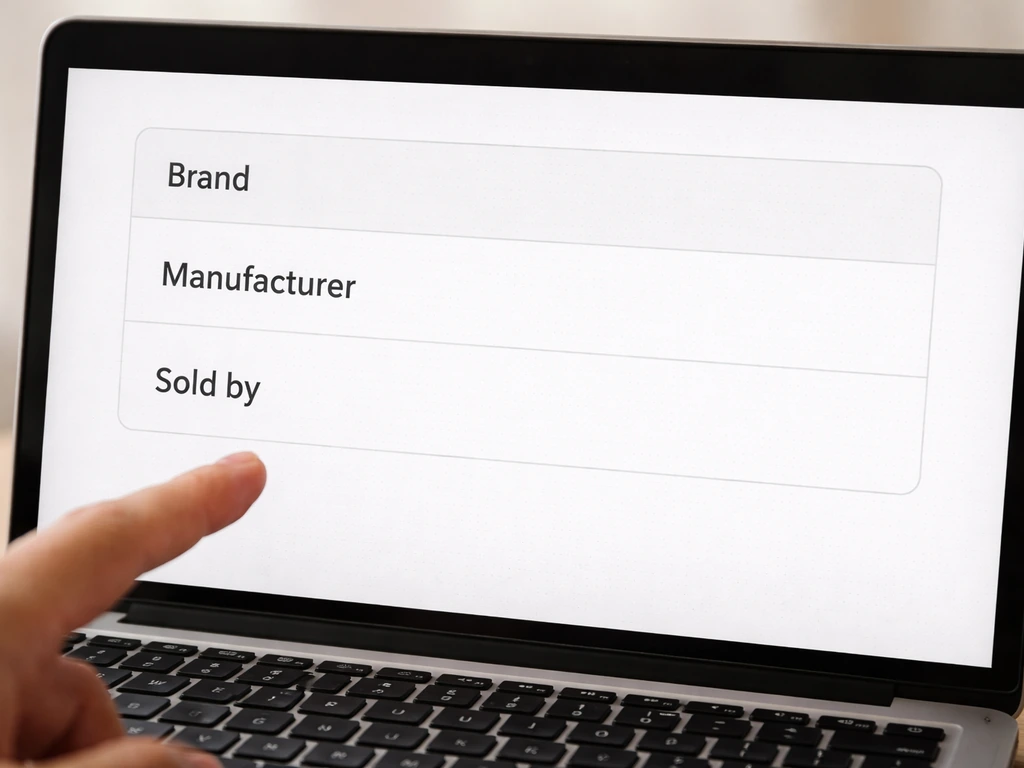
Every product page on a major retail site has a "Brand," "Manufacturer," or "Sold by" field buried in the specs. These three things can tell you very different information, and knowing the difference matters.
| Field | What it tells you | Where to find it |
|---|---|---|
| Brand | The trade name on the product — often a marketing label, not the factory | Product specs / details tab on Lowe's, Amazon, Walmart |
| Manufacturer | The company that legally produced or imported the item — may match brand or may be a separate entity | Specs section, sometimes labeled "MFR" or "Supplier" |
| Sold by | The seller fulfilling the order — could be a third-party reseller, not the brand at all | Near the Add to Cart button on marketplace listings |
| Model / SKU | A string that identifies the exact product — useful for cross-referencing across sites | Specs section or in the URL/product title |
On Lowe's, scroll past the hero images and marketing copy to the "Specifications" accordion. Look for a "Manufacturer" or "Brand" line. If both say "Sunshine Valley," that confirms the brand is self-reporting as the manufacturer, which is common for importer brands. If "Manufacturer" shows a different company name than "Brand," that parent company name is the actual maker. On marketplace sites, also check the "Sold by" line near the buy box, if it's not "Sunshine Valley" or "Sunshine Valley Official," a third-party reseller may have bought stock and reposted it, and the real brand contact information could be buried or missing.
Check the product itself: tags, manuals, warranty cards, and SKU matching
If you've already bought the furniture (or you're standing in front of it in a store), the physical product is your best source of truth. Here's what to look for:
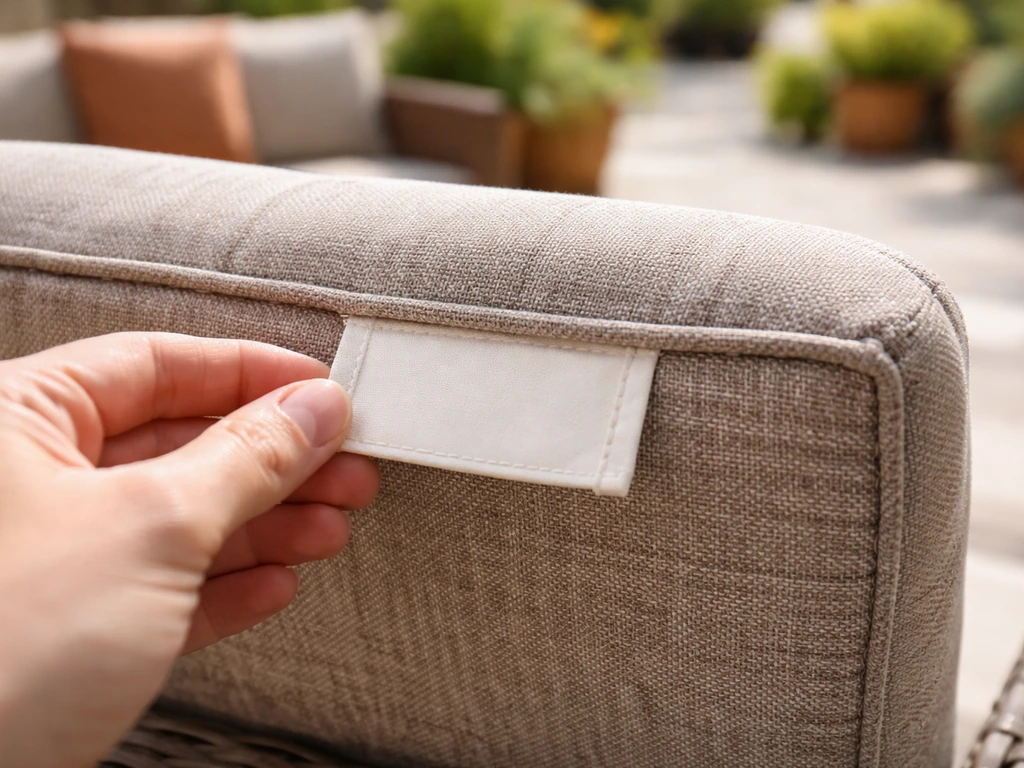
- Manufacturer tag: Usually stapled or sewn onto cushions, or affixed as a sticker to a frame tube. Look for a company name, address, or country of origin. If it says something other than "Sunshine Valley," that's the actual producing entity.
- Assembly manual cover page: Most patio furniture ships with a printed manual. The cover or back page typically lists the brand's legal business name, a customer service address, and sometimes a phone number. An address in China or Hong Kong with a U.S. distributor listed separately is a strong signal of an import brand.
- Warranty card: If there's a separate warranty card, the company name and contact on that card is the entity legally responsible for honoring the warranty — often the closest thing to the "real" manufacturer you'll find.
- SKU or model number on the box: Write this down. The format (for example, a string like SV-DT7-BK for a black 7-piece dining set) can be cross-referenced on other retail sites to see if the same item sells under a different brand name elsewhere.
The SKU matching trick is particularly useful. Take the model number from the Lowe's listing and drop it into Google with quotation marks around it. If that exact SKU shows up on Wayfair, Overstock, or Amazon under a different brand name, you've found an alias. Patio furniture factories frequently sell the same frame to multiple brands, each of which sells it under their own name. Seeing the same SKU under two names tells you both names are just labels on the same physical product.
If Sunshine Valley is a private label: how to find the underlying manufacturer
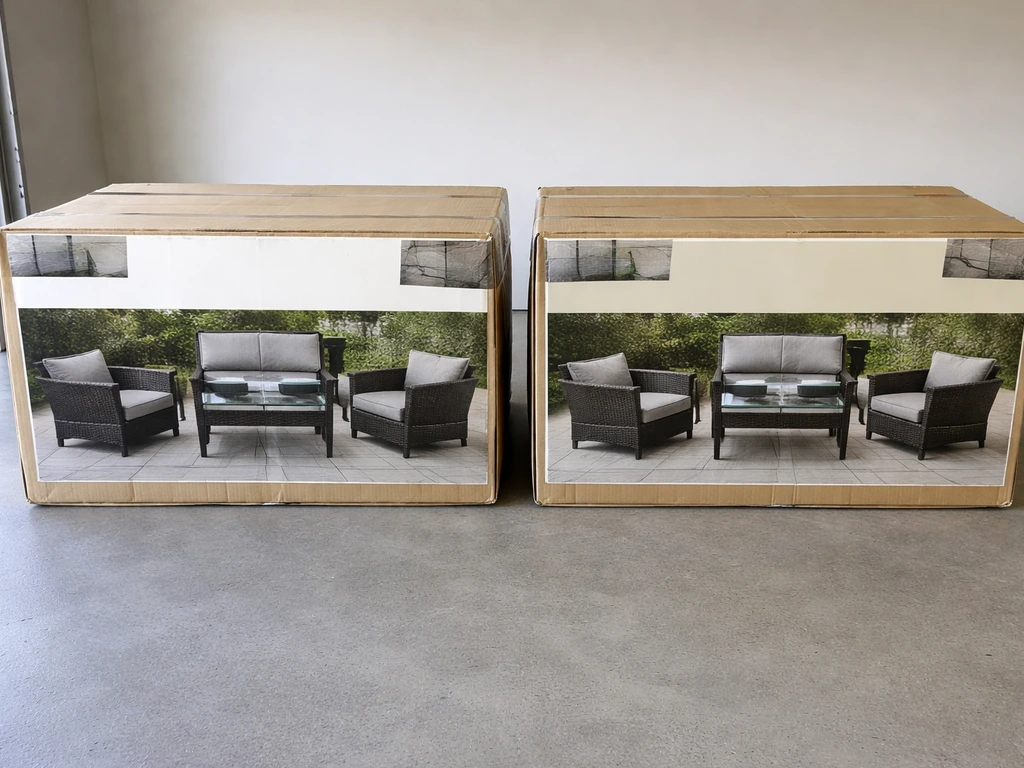
Private-label patio furniture is extremely common at big-box retailers. Lowe's, Home Depot, and Walmart all carry sets under exclusive brand names that don't exist anywhere outside their stores. If Sunshine Valley turns out to be a private-label line for a specific retailer, the retailer itself is effectively acting as the brand owner, and a contracted factory (usually in China, Vietnam, or Malaysia) does the actual production. Here's how to dig deeper:
- Search the brand name alongside the retailer name: Try "Sunshine Valley Lowe's manufacturer" or "Sunshine Valley patio furniture factory" in Google. Importer databases like ImportGenius or Panjiva index U.S. Customs shipping records and can show you which factories shipped products under a given brand name — though these services have a cost.
- Check the UPC: If you have the UPC from the listing or the box, search it on sites like buycott.com or barcodelookup.com. The registered company behind that UPC is sometimes the parent manufacturer or importer.
- Look for the same product under other names: Search image-reverse on Google Lens or use a description-based search (e.g., "7-piece black steel rectangle patio dining set rattan accent") to find identical-looking sets under other brand names. If you find one, that alternate brand may have more transparent manufacturer information.
- Check Alibaba or Made-in-China: If you can identify the model style, searching Alibaba by product type can surface the original factory listing — complete with minimum order quantities and factory location — which confirms the production origin even if the brand name differs.
This same approach works when researching other patio brands that operate in a similar way. Brands like Phi Villa and Sunvilla, for instance, also source from contracted factories and sell through specific retail channels, so the process of tracing back to the original manufacturer is nearly identical. If you are specifically trying to figure out where to buy Sunvilla patio furniture, the same retailer and listing-tracing approach applies.
What to do when the maker isn't listed anywhere
Sometimes you hit a wall: the listing just says "Sunshine Valley," there's no manufacturer field, and Google doesn't surface a parent company. That happens more often than it should. Here are your concrete next steps: If you specifically want Agio patio furniture, start by checking major retailers, then compare online listings from reputable sellers.
- Contact Lowe's customer service directly and ask: "Who is the manufacturer of this item, and is there a direct manufacturer warranty or just a store warranty?" Note the case number or rep name for follow-up. Lowe's associates can sometimes pull supplier information from their internal systems that never makes it to the consumer-facing page.
- Use the Lowe's product Q&A section: If other buyers have already asked about the manufacturer, you'll see the answer there. If not, post the question — Lowe's often responds within a few days, and so does the community.
- Email the brand directly: Search for a "Sunshine Valley" official website or customer service email. If one exists, ask them for their legal business name, country of manufacture, and warranty terms. A legitimate brand will answer. A brand that doesn't respond is a red flag for post-purchase support.
- Request assembly documents before purchase: Ask the retailer to email you the assembly manual PDF. The cover page will typically include the manufacturer's legal name and address, which is publicly required on most imported goods sold in the U.S.
- Search the CPSC database: The U.S. Consumer Product Safety Commission maintains records of product recalls and registrations. Searching by brand name there can surface the legal importer's name, which is the party responsible for the product under U.S. law.
Keep any evidence you gather: screenshots of listings, warranty language, email responses from customer service. If you are trying to trace where a specific Sunshine Valley patio set is made, the location of the contracted factory is usually not listed on the consumer page and often requires checking the manual or warranty documentation warranty language. If a problem comes up after purchase (a broken weld, rust through the finish, a warranty claim), having documentation of who you believed made the product and what was promised is genuinely useful.
Before you buy: a confidence checklist
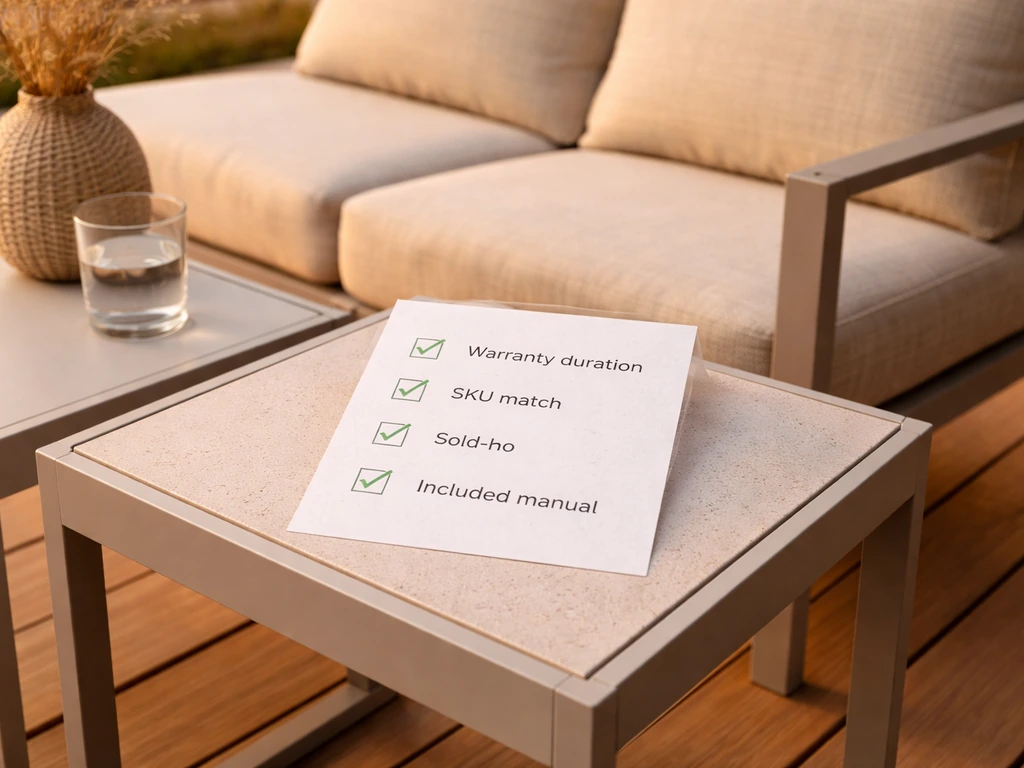
Identifying the manufacturer is really just one part of buying smart. Once you know who made it (or you've accepted that it's an import brand with limited transparency), run through these final checks before you commit:
- Warranty coverage: What does it actually cover, and for how long? One year on frames and 90 days on cushions is typical for this price tier. Know who you're calling if something breaks.
- Frame material: Sunshine Valley steel sets are fine for sheltered patios, but bare steel rusts faster than powder-coated aluminum. Check the finish specification — powder-coated steel is more durable than painted steel, and aluminum beats both for longevity in wet climates.
- Cushion fill and fabric: Polyester fill compresses quickly. Look for high-density foam with a weatherproof outer fabric rated for UV exposure. Listings that don't specify fill density are usually using lower-grade materials.
- Replacement parts availability: Can you buy a replacement umbrella pole, a chair leg cap, or a cushion cover in two years? For import brands, the answer is often no. Ask the retailer before you buy.
- Compatibility with your space: Verify the assembled dimensions (not just the table top size) match your patio footprint with chairs pulled out. Lowe's and most retailers list these in the specs — double-check them.
- Return window: Lowe's generally offers a 90-day return window on patio furniture, but marketplace sellers vary widely. Confirm before ordering.
The bottom line is that "Sunshine Valley" is a brand name, not a factory name, and like many mid-range patio brands at big-box retailers, it operates as an importer label on furniture produced overseas. That's not a deal-breaker, but it does mean your warranty, replacement parts, and post-sale support all run through the brand or the retailer, not a large manufacturer with a service department. Know that going in, do the checks above, and you'll be well-positioned to buy with confidence.
FAQ
If the listing only shows “Sunshine Valley” and nothing else, how can I still find the maker?
Use the model or SKU from the listing, then search that exact identifier across multiple retailers. If nothing appears, switch to the manual, warranty card, and any care instructions included in the box, because those documents often list the importer, distributor, or responsible party even when the product page does not.
What’s the difference between “Brand,” “Manufacturer,” and “Sold by,” and which one matters most?
“Brand” is usually the marketing label, “Manufacturer” is intended to name the entity responsible for production, and “Sold by” identifies the retailer or reseller you’re buying from. For after-sales support, “Sold by” is often the most important, while “Manufacturer” helps you infer who is standing behind the build.
How can I tell whether “Sunshine Valley Official” is the real brand contact or just a reseller?
Check whether the contact details, warranty terms, and return address are tied to the same entity across the listing, checkout, and warranty paperwork. If the warranty is issued by a different company than the seller name, treat the warranty company as the practical owner for claims.
Is it normal that the factory name is missing for Sunshine Valley patio furniture?
Yes. Many patio sets are private-label or importer brands, so the consumer page often omits the actual factory. The best workaround is to rely on document-based traceability (manual, warranty, carton labeling) rather than expecting the webpage to show a factory directly.
If the same SKU shows up under different brand names, does that mean the furniture is identical?
It often indicates the same base frame or components, but finishes, cushion fabric, and hardware can differ by brand. Before assuming equivalence, compare the material specs (steel grade or coating description), cushion fill type, and warranty coverage for each brand listing.
How do I verify that the set I’m viewing is the same model as the one I found under another brand?
Match more than just the model number. Confirm the dimensions, piece count (for example 7-piece set), color name, and sometimes the included accessories. Listings can reuse similar SKUs, so corroborating details reduces the risk of mixing variants.
What should I check on the warranty to confirm I’m covered if there’s rust or a broken weld?
Look for the specific warranty sections that mention rust-through, frame or weld failures, and exclusions for outdoor exposure. Also confirm the filing process (who to contact, required photos, and proof of purchase timeframe), because importer brands typically funnel claims through a specific company.
Where can I find the importer or responsible party if it’s not on the product page?
Check the warranty registration page, the warranty booklet, and the inside label on the carton or assembly instructions. If the set ships in separate boxes, each box may include a label with the importer and batch or lot information.
If I’m buying from a marketplace seller, what’s a common mistake to avoid?
Assuming the marketplace seller name equals the brand owner or warranty administrator. Always read the warranty document terms for who actually handles claims, and confirm the return window and parts replacement policy before purchase.
Does knowing who makes Sunshine Valley matter for replacement cushions and parts?
Yes, because parts fulfillment is usually tied to the brand or warranty administrator rather than the factory. Before ordering, verify whether the listing or warranty includes part numbers for cushions, replacement sling/rattan panels, or compatible hardware, so you can reorder without guessing.
What quick checklist can I use before I commit to buying a Sunshine Valley set?
Confirm (1) the specs for frame material and coating, (2) warranty coverage for the issues you’re most worried about (rust, structural failure, fading), (3) who handles warranty claims, and (4) whether the exact model number matches the same product across retailers. If any of these are unclear, contact customer service and ask for the warranty administrator name.