
Patio cushions are expensive because outdoor-rated materials cost significantly more to manufacture than indoor equivalents. You're paying for solution-dyed acrylic fabrics that resist UV fading from the fiber out (not just a surface coating), specialized open-cell foam that drains water and resists mold, marine-grade zippers that won't corrode after one rainy season, and reinforced seam construction that holds up to sun, moisture, and daily use. A cushion that looks similar to a cheap indoor pillow at first glance can cost three to five times more because every single component has been upgraded for outdoor performance. Once you understand what's actually inside a quality patio cushion, the price makes a lot more sense, and you can start spotting where to get the best value.
Why Are Patio Cushions So Expensive—and How to Pay Less

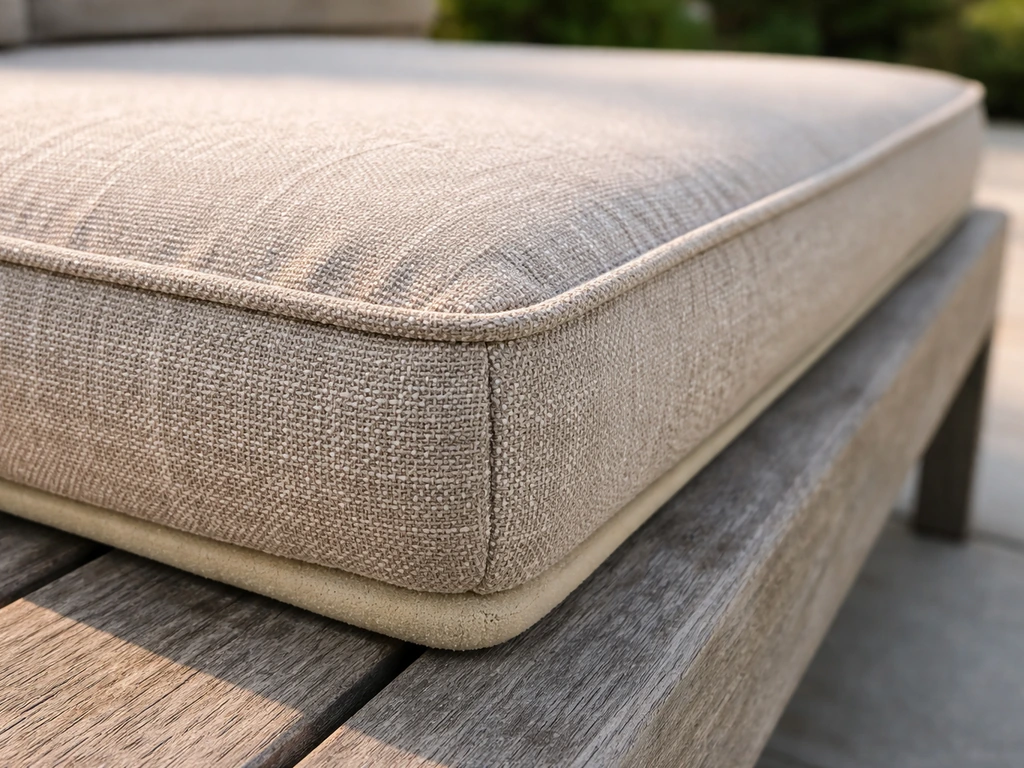
What you're actually paying for: materials, foam, and weather performance
The fabric on a quality outdoor cushion isn't just any fabric with a waterproof spray applied to it. Premium outdoor cushions use solution-dyed acrylic, which means the color is baked into the fiber during manufacturing, not printed or coated on the surface. Sunbrella is the most well-known brand in this category, and its fabric is explicitly marketed as inherently fade-resistant, mold/mildew resistant, and water-repellent as a result of how the fiber itself is constructed. That kind of material runs roughly $18 to $35 per yard at wholesale. Standard outdoor polyester fabric, by comparison, runs closer to $8 to $15 per yard wholesale. That gap shows up directly in the retail cushion price.
Fabric weight matters too. Quality outdoor upholstery fabric typically runs around 9 to 10 ounces per square yard, which gives it the durability to handle UV exposure, abrasion, and repeated wet/dry cycles. Lighter fabrics fade and break down faster. Some fabric lines even carry 10-year warranties against fading and mold when they meet this construction standard, a meaningful signal that you're getting a material built to last.
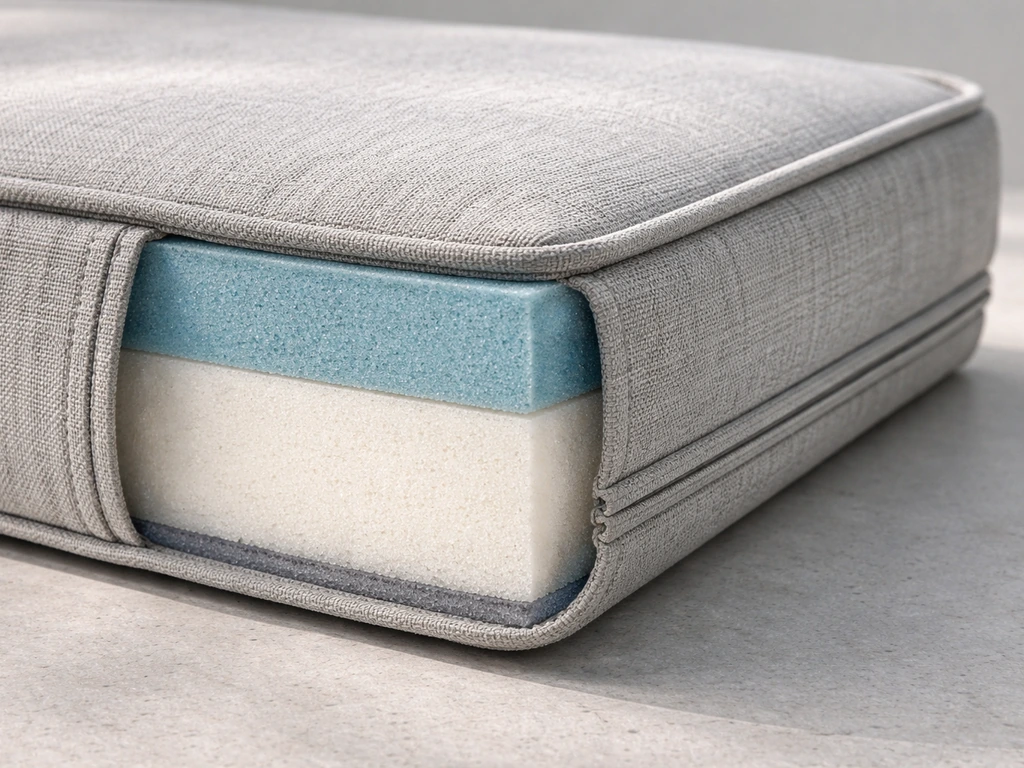
Inside the cushion, the foam is equally important and equally specialized. Standard indoor upholstery foam should never be used outdoors, it absorbs and holds water, which creates the perfect environment for mold. Proper outdoor cushions use either reticulated (open-cell) foam designed to drain water quickly, or high-resilience foam treated for outdoor use. Reticulated 'dry-fast' foam has an open structure that lets rain pass straight through, and it's often manufactured with a fungicide to inhibit mold and mildew growth. High-resilience foam, which carries a density around 2.3, can last 12 to 20 years in demanding use. That's real longevity built into the core, and it costs more than the cheap polyester fill you'd find in a bargain cushion.
One nuance worth knowing: fully waterproof outer fabrics aren't always ideal. Without any breathability, trapped moisture inside the cushion can actually encourage mold from the inside out. The better approach, and what premium brands use, is a water-resistant/repellent outer fabric combined with foam that drains and dries fast. That balance requires more careful material selection and adds to the cost.
Why outdoor construction costs more than it looks
The components you can't easily see are often the most expensive part. Take zippers: standard metal zippers corrode and seize within a single outdoor season. Quality outdoor cushions use marine-grade plastic zippers or stainless options specifically designed to handle UV exposure, rain, abrasion, and repeated compression. 'Cheap plastic zippers fail' is a real pattern that shows up in budget cushion reviews, the cover becomes non-removable and non-washable after a year, shortening the product's useful life dramatically.
Seam construction is another hidden cost driver. Outdoor cushion seams need to resist moisture wicking, UV degradation, and mechanical stress from being moved, sat on, and exposed to weather repeatedly. Many quality cushions use multi-layer builds, a foam core wrapped in polyester batting (similar to Dacron) for shape retention, enclosed in a zippered inner liner, then covered by the UV-resistant outer fabric. Each layer adds material cost and labor. The polyester wrap alone helps maintain the cushion's shape and prevents the foam from shifting inside the cover, which is why well-made cushions hold their form after years of use while cheap ones look deflated within a season.
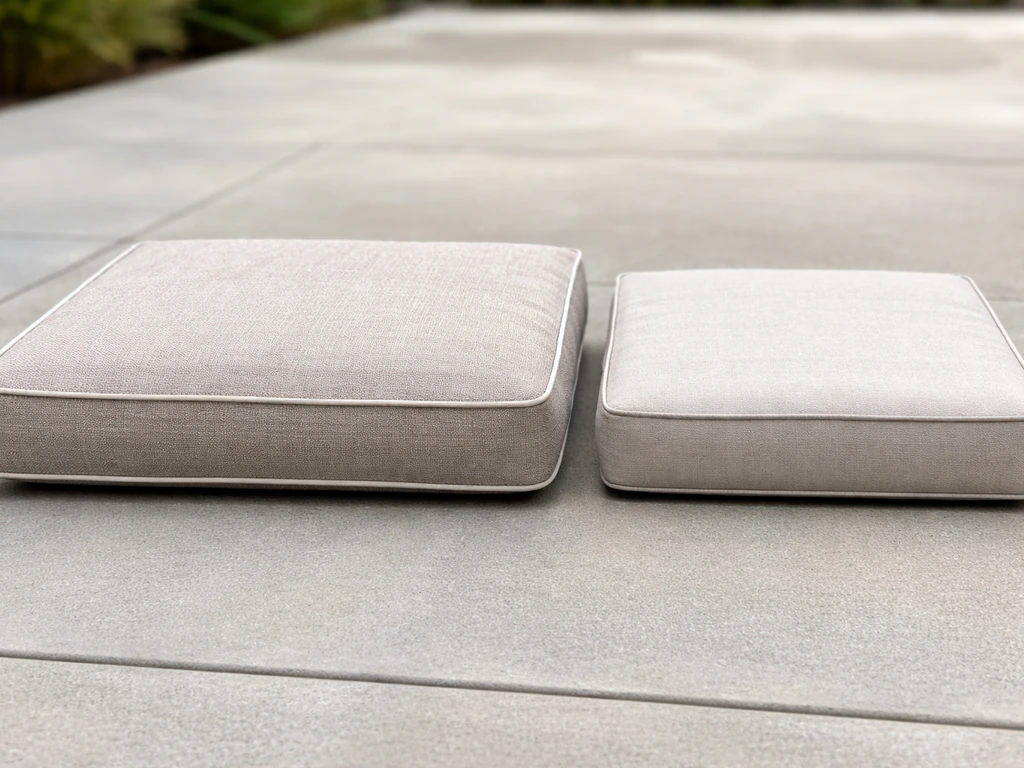
Cushion thickness also plays a role in cost. Common thicknesses run from 2 inches up to 6 inches, but keep in mind that foam compresses under body weight, a 4-inch cushion may deliver closer to 2.8 to 3.2 inches of actual support. Thicker cushions require more foam and more material overall, and the difference between a 2-inch and a 4-inch cushion represents a meaningful jump in material cost that flows straight into retail pricing.
How brand, size, and customization push prices higher
Brand carries real weight in outdoor cushion pricing. Sunbrella fabric commands a premium not just for marketing reasons but because its 5-year limited warranty on upholstery fabrics (and 10-year warranty on shade/marine fabrics) is backed by verifiable material science. When a brand can make specific, testable claims, like solution-dyed fiber construction versus vague 'outdoor-rated' labeling, you're paying for accountability alongside the material. Brands that use Sunbrella or similar premium fabrics will price their cushions accordingly, and that's worth something if you're planning to keep furniture for more than a couple of seasons.
Size matters too, in a straightforward way: more fabric and more foam equals higher cost. A deep-seat sofa cushion or a chaise lounge cushion uses dramatically more material than a basic chair pad. When you're shopping for replacement cushions versus full sets, the per-cushion price can look deceptively low until you multiply it by the number of seats you're outfitting.
Custom cushions are the biggest price jump of all. Custom-fitted covers typically run 30 to 50 percent more than standard-size options, and custom manufacturing lead times are usually 20 to 25 business days, with made-to-order international production taking anywhere from 2 to 4 months. Most custom cushion makers also do not accept returns except for production errors, which shifts all the sizing risk to you. If you go custom, you need exact measurements, to the nearest quarter inch for width and depth, and careful attention to thickness so the cushion fits the cover and frame without wrinkling or creating a sloppy fit.
Where prices vary most: big-box stores, online, specialty brands, and warehouse clubs
Not all retailers price outdoor cushions the same way, and the differences can be significant for identical or comparable specs. If you want to find where to buy patio cushions near me, start by comparing local big-box stores and specialty shops, then check online for matching specs and delivery options.
| Channel | Price Range | Strengths | Watch Out For |
|---|---|---|---|
| Warehouse clubs (Costco) | Budget to mid-range (individual chair cushions seen around $18–$20) | Strong return policy (90-day for most items), bulk value, satisfaction guarantee | Limited selection, seasonal availability, sizes may not match your furniture |
| Big-box stores (Home Depot, Walmart, Target) | Budget to mid-range | Wide availability, easy returns, in-store pickup | Vague 'outdoor' labeling, lower-end foam and fabric in budget tiers |
| Online marketplaces (Amazon, Wayfair) | Full range, budget to premium | Huge selection, easy spec comparison, competitive pricing | Wildly inconsistent quality, pay attention to actual fabric content and foam type |
| Specialty/premium brands (Frontgate, Pottery Barn, etc.) | Mid to high-end | Better materials, stronger warranties, curated design options | High markup, clearance/outlet sections are where real deals appear |
| Custom cushion makers (Cushion.com, CustomCushions.com) | Mid to premium, 30–50% more than standard | Exact sizing for unusual frames, full spec control | Long lead times, no returns on custom orders, high sizing stakes |
Warehouse clubs like Costco offer some of the best value for straightforward chair cushions, especially when you factor in their return policy. The trade-off is limited selection and sizes that may not match your specific furniture.
Online marketplaces give you the widest range to compare, but you have to read past the marketing language and look for specific details: fabric content (solution-dyed acrylic vs polyester), foam type, density, and zipper material are the specs that actually tell you what you're buying. If you want the best place to buy patio cushions, start by comparing online listings and then narrow down options based on fabric, foam type, zipper material, and warranties.
If you're looking for replacement cushions for a specific set, specialty retailers and custom makers give you the most sizing options but at a real price premium.
When patio cushion prices actually drop
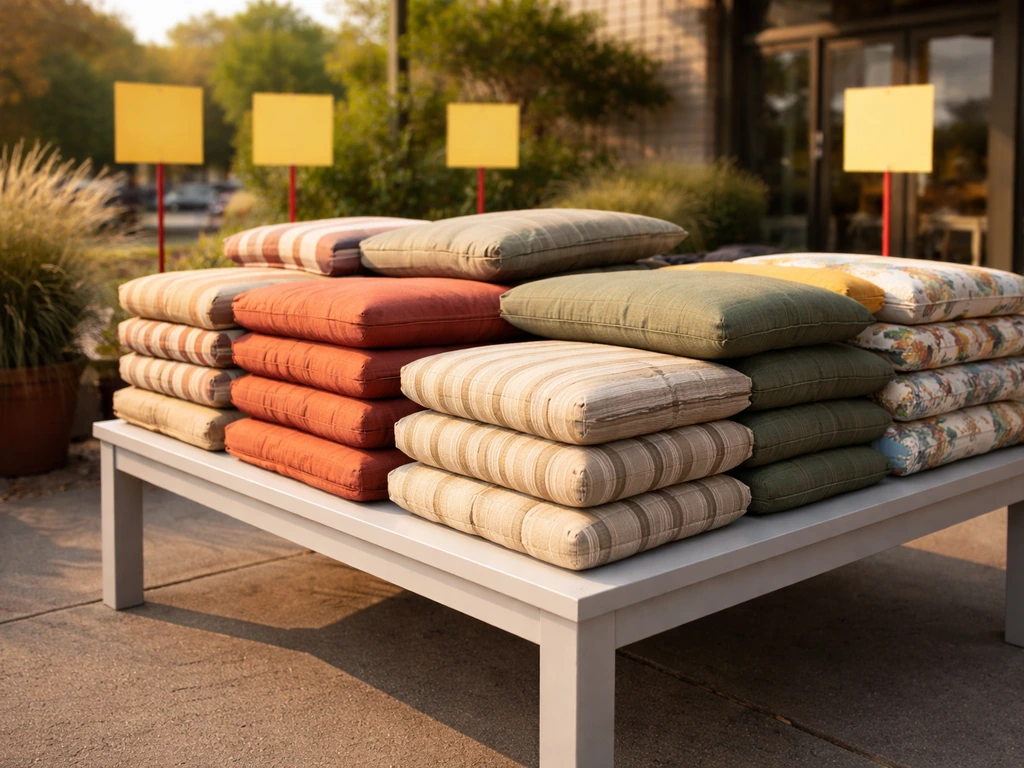
Seasonal timing is one of the most reliable tools for paying less. Patio cushion prices follow outdoor furniture seasons closely, and there are predictable windows where discounts appear: For example, Home Depot’s “Spring Black Friday” promo is a seasonal media-campaign that signals major markdown cycles can appear in spring to clear out patio and outdoor inventory Patio cushion prices follow outdoor furniture seasons closely.
- Late summer/early fall clearance (August through September): This is the biggest markdown window. Retailers need to clear seasonal inventory before winter, and discounts of 30 to 60 percent are common on remaining cushion stock.
- End-of-season sales at specialty retailers: Brands like Frontgate run active outlet and clearance sections specifically to move through seasonal inventory. If you can wait until August or September and shop those clearance pages directly, the savings are real.
- Spring 'Black Friday' events (April to May): Home Depot and other big-box retailers run major spring promotional events — sometimes called 'Spring Black Friday' — with 14-day promotional windows that push markdowns on patio categories to drive the season's opening purchases.
- Holiday weekends (Memorial Day, July 4th, Labor Day): These are reliable discount windows, especially at big-box stores and online marketplaces. Labor Day in particular overlaps with end-of-season timing, making it one of the best combined deal moments.
- Warehouse club seasonal drops: Costco rotates patio inventory seasonally and often offers lower per-unit pricing than comparable retail when items are in stock. The catch is that once they're gone, they're gone for the season.
If you need cushions right now and can't wait for clearance, the next best move is to check whether replacement cushions are available separately rather than buying a full set. If you are wondering who sells patio cushions, start with warehouse clubs, online marketplaces, and specialty retailers, since they offer the most options for sizes and replacement sets.
You can usually find replacement patio furniture cushions at warehouse clubs, specialty retailers, or by ordering directly through online marketplaces that list the exact fabric, foam, and zipper specs replacement cushions are often sold at a lower per-piece price. Replacement cushions are often sold at a lower per-piece price and allow you to refresh worn-out cushions without replacing functional furniture frames.
If you want to reupholster patio furniture instead of replacing cushions, look for local upholstery shops that handle outdoor fabric and foam, or search for furniture reupholstery services online where to get patio furniture reupholstered. To get patio furniture reupholstered, ask any local upholstery shop whether they use outdoor-rated fabrics and foam that drain and resist mold reupholster patio furniture.
How to shop smart today: measure first, then compare specs
Before you look at a single listing, measure your furniture. Record width, depth, and thickness to the nearest quarter inch. For thickness, note your frame clearance, the cushion needs to fit within the frame arms and back without creating an awkward height. A common mistake is sizing up too aggressively: going more than a half inch to one inch larger than your original cushion often creates fit problems. Remember that foam compresses 20 to 30 percent under weight, so a 4-inch cushion is your real-world comfort target, not a 4-inch finished height.
Once you have your measurements, here's how to evaluate listings efficiently:
- Check fabric content first. 'Solution-dyed acrylic' or a named brand like Sunbrella signals real outdoor performance. 'Polyester' with 'outdoor-rated' in the title is a much weaker claim — it may still be fine for covered patios with limited sun exposure, but it won't last as long in direct UV environments.
- Look for foam type. 'Reticulated,' 'dry-fast,' or 'open-cell' foam indicates proper outdoor drainage. If the listing doesn't mention foam type at all, that's a red flag for a budget build.
- Check the zipper material. 'Marine-grade' or 'rust-resistant' zippers matter more than they sound — a seized zipper means you can't wash the cover, and the cushion becomes a hygiene and mold problem.
- Compare warranties. A fabric warranty of 3 to 5 years is a reasonable baseline for quality outdoor cushions. Foam insert warranties tend to be shorter (sometimes just 1 year), so factor that into your long-term cost math.
- Set a realistic target price. A quality patio chair cushion from a reputable brand runs $40 to $80+. A deep-seat replacement cushion can run $80 to $150+. If you're seeing cushions at $15 to $20, they may work for light or sheltered use, but expect to replace them in a season or two.
- Check clearance and outlet sections before paying full price. Frontgate's outlet, Home Depot's clearance aisle, and Costco's seasonal remainders are all worth checking before committing to full-price inventory.
- Consider replacement cushions before full-set purchases. If your furniture frames are solid, buying replacement cushions separately is almost always cheaper than buying a full set — and you have far more sizing and spec options.
The bottom line is that patio cushions cost what they cost because outdoor performance is genuinely more expensive to build into a product. But you don't have to pay full retail price to get good quality.
Knowing what specs to look for, timing your purchase around seasonal clearance cycles, and comparing across channels, warehouse clubs, big-box clearance, specialty outlet sections, and online marketplaces, can realistically cut your cost by 30 to 50 percent without sacrificing the material quality that makes outdoor cushions worth buying in the first place. If you want a quick way to compare options, search for where to buy cheap patio cushions and then verify the fabric and foam specs first.
If you want to find the best deals, start with where to buy patio furniture cushions online and compare fabric, foam, and zipper materials before checkout online marketplaces.
FAQ
How can I tell if an “outdoor cushion” is actually worth the higher price?
Look past marketing terms and confirm three specifics: solution-dyed acrylic (not just “waterproof sprayed”), the foam type (reticulated/open-cell or high-resilience for outdoor use), and the zipper material (marine-grade plastic or stainless). If the listing does not disclose fabric type or foam type, assume you may be paying more for unclear components.
Are water-resistant outer fabrics enough, or do I need fully waterproof cushions?
Generally you want water-resistant, not fully sealed. Completely waterproof outer covers can trap moisture inside, which increases the chance of mildew developing within the cushion. The better setup is repellent fabric plus fast-draining, quick-drying foam.
What’s the biggest mistake people make when buying replacement patio cushions?
Sizing up too aggressively. If you choose a replacement more than about 1/2 inch to 1 inch larger than the original, you can end up with poor fit, wrinkling, or cushions that do not sit correctly in the frame. Measure width, depth, and finished thickness with frame clearance in mind.
Why do some cushions look fine at first but fail quickly?
Most early failures come from the zipper and foam. Corroding zippers shorten usable life by making the cover non-removable, and foam that absorbs water keeps the cushion damp. Even if fabric looks similar, the internal drainage and corrosion resistance determine whether it lasts.
Is fabric weight always the best indicator of cushion durability?
Fabric weight helps, but it is not the only factor. Heavier fabric usually improves abrasion and UV resistance, but seam construction and foam quality still matter. A lighter fabric with strong seams and good foam can outperform a heavier fabric with weak stitching or non-draining foam.
Should I store patio cushions indoors during rain or only during winter?
If you can, store them when they will stay damp for long periods (frequent storms or extended wet weather). Cushions designed to drain and dry faster handle short wet spells better, but prolonged moisture exposure still accelerates odor and mildew risk.
What measurements should I write down before ordering, and how precise do they need to be?
Record width and depth to the nearest quarter inch, plus finished thickness, and also note whether the cushion sits under frame arms or within a channel. For custom or higher-end fit, thickness accuracy matters because foam compresses under load, so “4 inches” finished height is not the same as real support height.
How do I compare two listings that both claim “outdoor” fabric but have different prices?
Use a spec checklist: fiber type (solution-dyed acrylic vs polyester), fabric weight (roughly 9 to 10 ounces per square yard for many premium lines), warranty length, and whether the zipper is corrosion-resistant. If one product is significantly cheaper but lacks these details, it is often cutting cost in components you cannot easily see.
Do warranties reliably signal better patio cushions, or are they mostly marketing?
They are a useful signal when the warranty is specific and tied to material construction, such as coverage for fading and mold under defined conditions. A vague “outdoor use” guarantee is less meaningful than a warranty that names the fabric behavior (fade resistance) and the time window.
Are thicker cushions always better, or can they cost more without improving comfort?
Thicker can help, but only if the frame allows it. Foam compresses under body weight, so comfort depends on real-world support height and fit. If thicker cushions do not sit properly in the frame, you can lose comfort even though you paid for more material.
Can I reduce costs by replacing only the foam or the cover?
Sometimes, but it depends on the cushion construction. If the cover zips off with a corrosion-resistant zipper and the inner liner is intact, you may be able to refresh the cushion by swapping foam. Avoid assuming “cover replacement” is possible if the design uses non-serviceable construction or cheap zippers.
What should I check about delivery and lead times when buying custom cushions?
Custom options can take much longer than standard items, often around several weeks to a few months for international production. Also confirm the return policy and verify that measurements are correct, since many custom makers do not accept returns for sizing mistakes.
How do seasonal sales interact with fabric and foam quality, not just price?
During clearance, retailers may discount older stock, which can be a good deal if the specs are still premium (solution-dyed acrylic, outdoor foam type, corrosion-resistant zipper). Verify the exact fabric and foam details in the discounted listing, because some clearance items are lower-spec replacements rather than the same construction at a reduced price.