
The best way to buy patio furniture in 2026 is to measure your space first, pick a material that honestly matches your climate and maintenance tolerance, then time your purchase around spring sales (April through Memorial Day) or end-of-season clearance (August through September) to save 30 to 55 percent off retail. Shop warehouse clubs like Costco for value sets, Home Depot or Wayfair for wide selection and deep promotional discounts, and Big Lots or Walmart for budget-friendly starter pieces. Then protect what you buy with the right cover and a simple care routine so it lasts a decade instead of three seasons.
Best Way to Buy Patio Furniture: A Practical Guide

Rowan Vale
13 May 2026
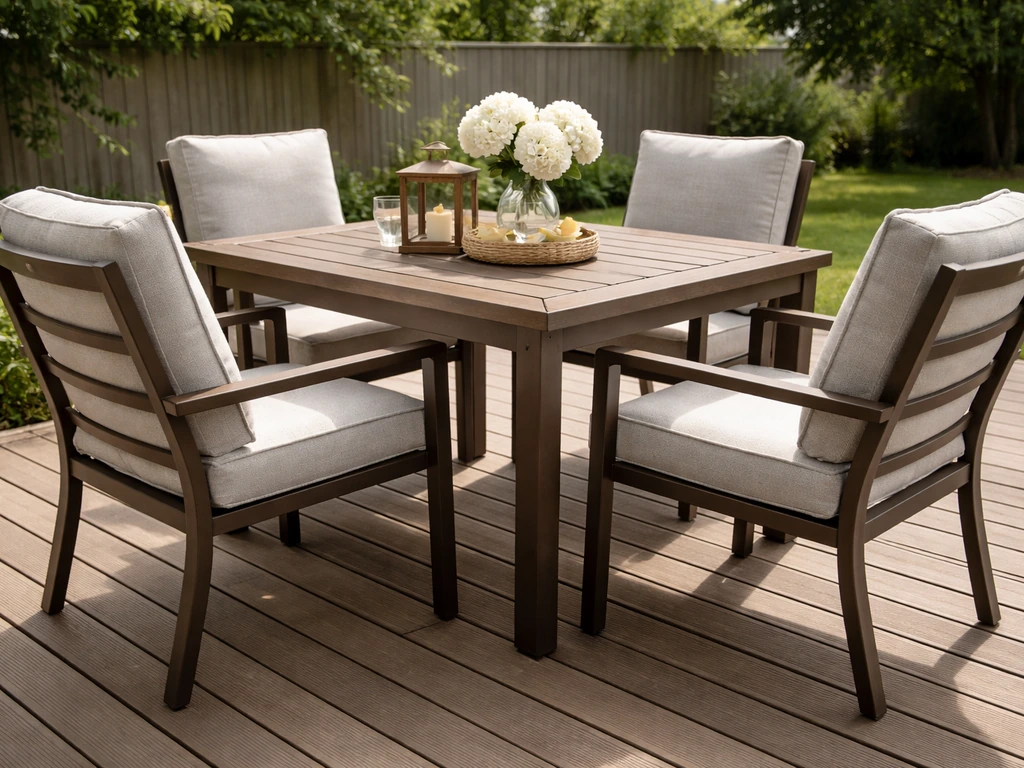
Start here: budget, space, and materials
Before you look at a single product page, spend 20 minutes with a tape measure and a number in your head. These two inputs eliminate about 80 percent of the bad purchases people make.
How to measure your patio or balcony correctly
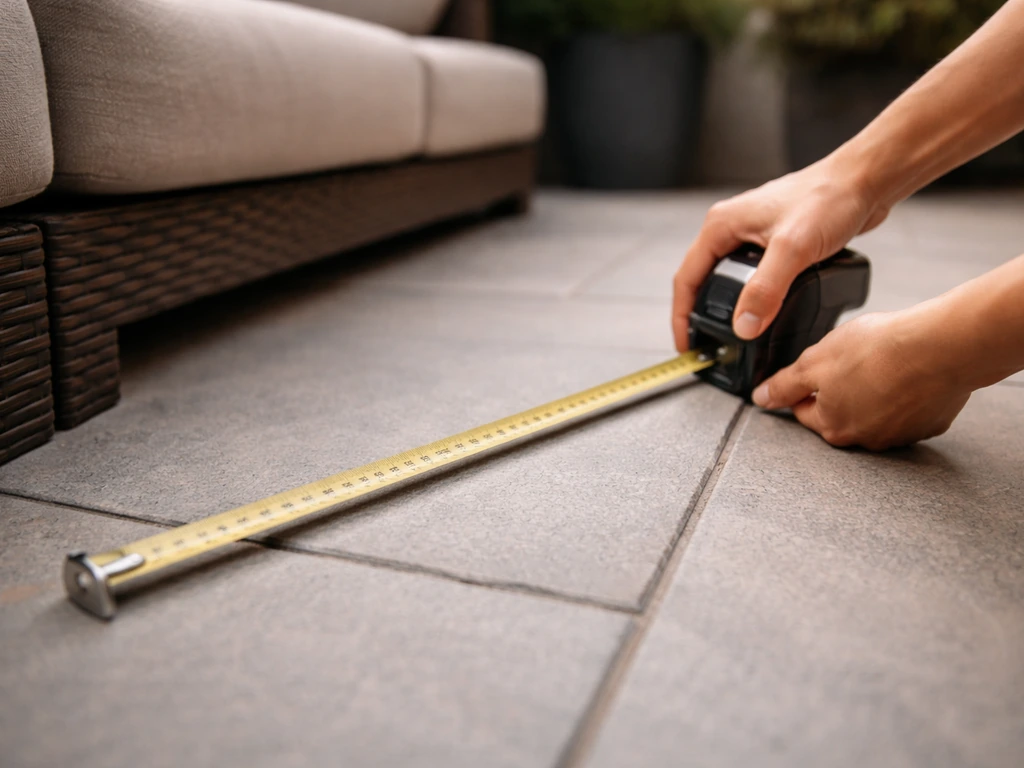
Measure the full dimensions of your outdoor space, then subtract for clearance. A standard planning rule is to leave 30 to 36 inches of walkway around each furniture grouping so the space feels comfortable, not cramped. For a dining setup specifically, allow at least 3 feet around the table so chairs can pull out without hitting a wall or railing. A practical formula: take your table diameter, add the depth of the chairs on each side, then add 12 to 18 inches of extra clearance per side for someone to walk behind a seated person. If the math doesn't work on paper, it definitely won't work in person.
For a small balcony or apartment patio, this exercise usually rules out a 7-piece dining set immediately and points you toward a bistro set, a loveseat with two chairs, or a compact sectional. That's not a compromise, it's just the right call.
Set a realistic budget before you shop
Budget ranges break down roughly like this: under $500 gets you a basic 4-piece chat set or bistro set at Walmart, Target, or Big Lots; $500 to $1,500 opens up better construction, more styles, and full 7-piece dining sets at Home Depot, Costco, or Wayfair; $1,500 to $3,000 gets you commercial-grade aluminum frames, Sunbrella cushions, and teak or powder-coated steel at specialty retailers; above $3,000 is the territory of brands like Gloster or RH Outdoor, where the materials and warranties justify the price if you're planning a 15-plus-year investment. Be honest with yourself here. A $600 set that lasts 4 years costs more per year than a $1,200 set that lasts 10.
Pick the right material for your climate
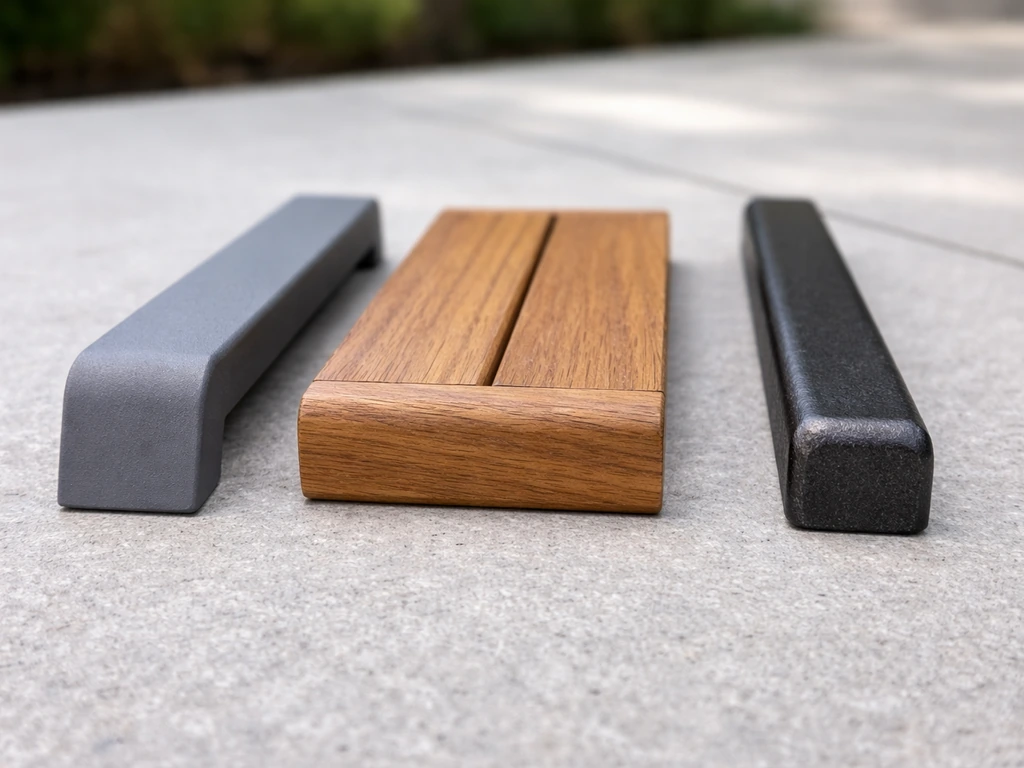
Material choice is where most people either get it right or regret it two summers later. Here's the practical breakdown:
| Material | Best For | Rust/Weather Resistance | Maintenance Level | Typical Lifespan |
|---|---|---|---|---|
| Aluminum (powder-coated) | Most climates, coastal areas | Excellent (rust-proof) | Low | 10–20+ years |
| Steel (powder-coated) | Dry/mild climates | Good if coating is intact | Moderate | 7–15 years |
| Teak wood | All climates, high humidity OK | Very good (high oil content) | Moderate to High | 15–25+ years |
| HDPE resin wicker | All climates, UV-heavy areas | Excellent (UV-stabilized) | Very Low | 10–15+ years |
| Cedar/other wood | Mild, dry climates | Fair (needs sealing) | High | 5–10 years |
Aluminum is the most forgiving choice for most buyers. It's blank" rel="noopener noreferrer">innately rust-resistant and when powder-coated it develops a durable, oven-cured protective layer that holds up in rain, humidity, and even coastal salt air. Plain steel needs that protective finish to resist rust and corrosion; if the coating chips and you ignore it, you'll see rust within a season. Teak is genuinely beautiful and structurally durable, but its silvery-gray weathered look will appear within a season if you don't oil it regularly, and oiling wet or damp wood traps moisture and causes more harm than good. HDPE-based all-weather resin wicker (not cheap PVC wicker) is UV-stabilized and essentially maintenance-free, with a realistic lifespan of 10 to 15 years or more depending on climate.
Choose the right shopping channel for your situation
Where you buy matters almost as much as what you buy, because delivery costs, return policies, and assembly expectations vary wildly across channels. There's no single best retailer for everyone, but each channel has a clear strength. There's no single best retailer for everyone, but if you're specifically hunting for the best online store for patio furniture, you can use the same checklist for returns, reviews, and materials across channels.
Online retailers (Wayfair, Amazon, Overstock)
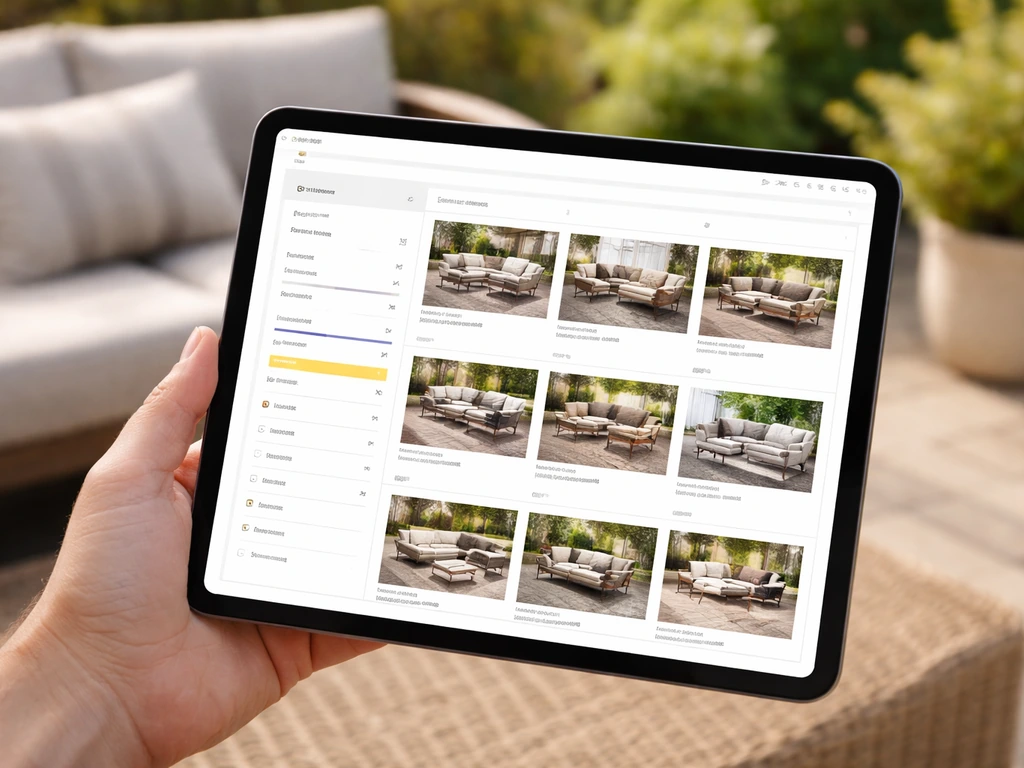
Online is where you get the widest selection and the easiest price comparison. Wayfair is particularly strong for patio furniture, with thousands of SKUs across every price point and frequent sales events (more on timing below). The trade-off is that you can't feel cushion density, check frame thickness, or test stability before buying. To compensate, filter reviews by verified buyers who mention specific details like weight, wobble, or cushion thickness rather than just star ratings. Pay close attention to the return window; Wayfair accepts most returns within 30 days of delivery, which is tight if you're buying in early spring and don't set it up for a few weeks.
Big box stores (Home Depot, Lowe's, Target, Walmart)
Home Depot and Lowe's are excellent for mid-range outdoor furniture, especially if you want to see something in person before committing or need same-day availability. Both run aggressive spring promotions (Home Depot's Spring Black Friday event in April 2026 offered up to 55 percent off select patio items). Walmart shines at the budget end of the market and recently ran a spring Patio and Garden event with up to 50 percent off, ending April 30, 2026. Walmart's standard return policy gives you 90 days after purchase, which is genuinely useful peace of mind. Target is good for smaller pieces and accessories but has limited full dining or deep-seating sets.
Warehouse clubs (Costco, Sam's Club)
Costco is legitimately one of the best places to buy patio furniture if you're in the $800 to $2,000 range and want solid quality without overpaying. Their rotation is limited (items sell out and don't come back), so if you see something you want, don't wait more than a day or two. What makes Costco especially buyer-friendly is their return policy: they offer a risk-free 100 percent satisfaction guarantee, and online orders can be returned either at any Costco warehouse or through Costco. If you are wondering what the best place to buy patio furniture reddit users recommend, start by comparing the return policies and seasonal inventory at major retailers like Costco Costco's satisfaction guarantee. com, making it low-risk even on a large set. The catch is that their seasonal patio inventory typically peaks from February through May and then dwindles fast.
Local furniture stores and specialty outdoor retailers
Local specialty stores and regional outdoor furniture dealers are worth visiting if you're spending $2,000 or more. You can see real construction quality, sit in the chairs, and negotiate on floor models or last-season inventory. Many local dealers also offer white-glove delivery and setup, which is genuinely worth something on larger sectionals or dining sets. Big Lots occupies a useful middle ground between discount and mid-range; their outdoor furniture selection varies by location but they regularly offer 20 to 40 percent off events, and clearance pricing at the end of summer can be exceptional.
Secondary markets (Facebook Marketplace, Craigslist, OfferUp)
For teak and high-quality aluminum sets especially, the secondary market is worth 30 minutes of browsing. Well-made outdoor furniture holds up over years, and sellers often list barely-used sets when they move or renovate. You can realistically find a $2,000 teak set for $400 to $700. The risk is that you can't verify frame integrity easily and there's no return option, so inspect in person and bring a magnet: it won't stick to aluminum, which helps confirm frame material claims.
When to buy for the best price
Timing your purchase is honestly one of the highest-leverage moves you can make. Patio furniture pricing follows a predictable seasonal cycle, and if you're flexible by even a few weeks you can save hundreds of dollars on the same item.
The full annual sale calendar
- February to March: Early spring inventory arrives. Prices are at or near full retail, but selection is at its peak. Good time to research, not buy.
- April to mid-May: Prime sale window. Retailers run Spring Black Friday events, Way Day (Wayfair), and spring garden events (Walmart, Home Depot, Lowe's). Discounts of 30 to 55 percent are realistic during these windows. This is the sweet spot if you want both selection and price.
- Memorial Day weekend (late May): Reliable sale event across virtually every major retailer. Discounts are consistent but selection starts thinning as popular items sell out.
- June to July: Prices stabilize or creep back up slightly. Sales happen but are less aggressive. Not a great time to buy unless you find a specific item on clearance.
- August to September: End-of-season clearance begins. Retailers need to clear floor space and warehouse stock. Discounts of 40 to 70 percent are common, especially on complete sets and floor models. The risk is limited selection, but if you can wait, this is the cheapest time to buy.
- Labor Day weekend: Second major sale event. Similar to Memorial Day but with deeper discounts because inventory is older.
- October onward: Deep clearance or sold out. If a specific item is still available, you'll find the lowest prices of the year. Most people are buying for the following summer.
- Black Friday/Cyber Monday: Some retailers discount patio furniture, but selection is thin and it's mostly a liquidation of whatever's left.
If you're buying today in May 2026, you're still in a strong window. Spring sale events are either wrapping up or transitioning into Memorial Day promotions, so check Home Depot, Wayfair, and Walmart right now for current markdowns before prices reset.
How to track prices without obsessing
For online purchases, use a browser extension like Honey or CamelCamelCamel (for Amazon) to check price history before you buy. Wayfair in particular runs items on sale repeatedly throughout the season; a quick check of the price history on a specific item can tell you whether today's 'sale' is actually a discount or just the standard price with a crossed-out number. For Costco items, there's no price tracking tool, so your best strategy is to check their website and app every few days once you identify something you want.
How to evaluate quality before you buy
Marketing language on patio furniture is genuinely unreliable. 'Weatherproof,' 'all-weather,' and 'rust-resistant' can mean almost anything depending on the manufacturer. Here's what to actually check.
Frame construction
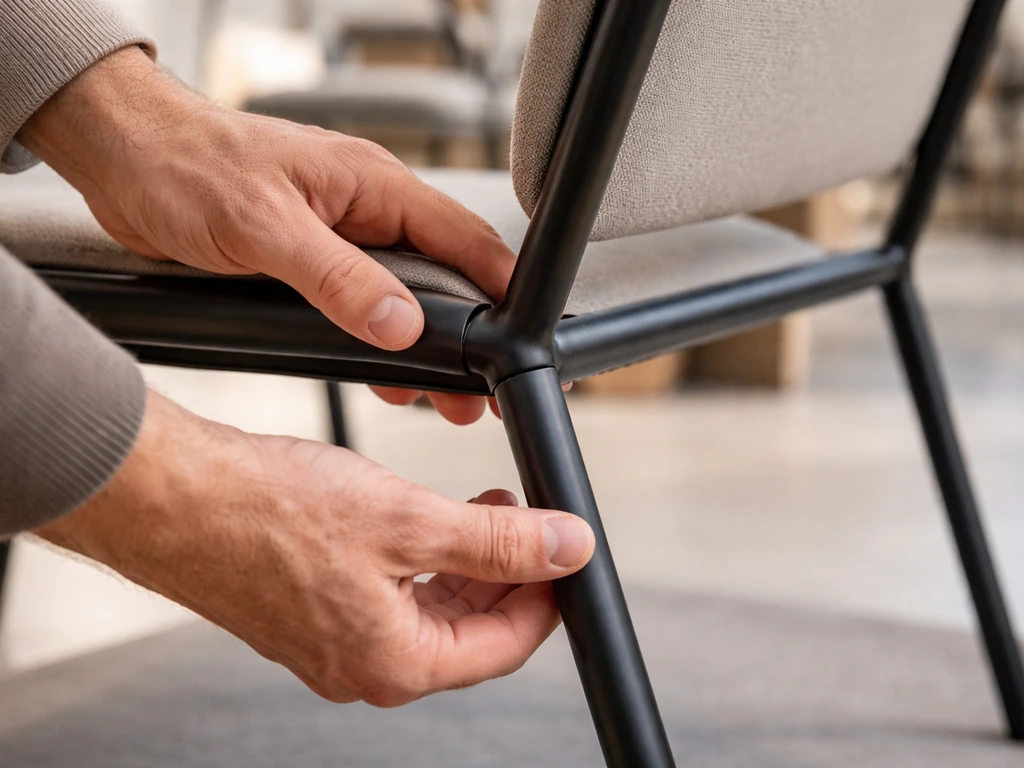
For metal frames, the two things that matter are wall thickness (thicker tubing = heavier and more stable) and whether the finish is powder-coated versus painted. Powder coating goes through an oven-curing process that bonds the finish to the metal more durably than spray paint. Cheap painted frames chip quickly, exposing bare steel to rust. Ask specifically about the finish type. For wicker-style furniture, confirm it's HDPE resin over a steel or aluminum frame, not PVC over a cheap wire frame. HDPE is UV-stabilized and will hold color and shape for a decade; PVC fades and becomes brittle much faster.
Cushions
Cushion quality is where budget furniture most often cuts corners. Look for cushions with removable, washable covers (not glued or sewn shut) and a fill density that doesn't compress flat when you sit on it. The gold standard for outdoor cushion fabric is Sunbrella acrylic, which is genuinely fade-resistant, water-resistant, stain-resistant, and backed by a limited 5-year warranty from Sunbrella directly. It's also significantly more expensive. If you're buying a budget set, budget for replacement cushions within 2 to 3 years; factor that into your total cost.
Stability test and fit-and-finish checks
In-store, rock each chair and table. Wobble at a showroom means significant wobble after a few seasons of outdoor use. Check that welded joints are clean (rough or lumpy welds indicate lower quality), that any glass tabletops are tempered (check for the etched safety mark in the corner), and that drawer or shelf hardware operates smoothly. Online, look specifically for reviews that mention wobble, rust appearing in year one, or cushions fading, as these are disproportionately important signals.
Common buying mistakes to avoid
- Buying without measuring first. A set that looks proportional in a warehouse or on a screen can overwhelm a small patio completely.
- Choosing style over climate suitability. Teak looks beautiful everywhere, but if you won't maintain it, it weathers to gray fast.
- Underestimating the total cost. A $900 set may need a $150 cover, $80 in replacement cushions, and a storage solution within two seasons. That's your real cost.
- Ignoring chair height vs. table height compatibility when mixing and matching.
- Buying mismatched materials that require incompatible care routines, like teak paired with powder-coated steel when one needs oiling and the other doesn't.
Delivery, assembly, warranties, and returns

These logistics points sound boring until something goes wrong. Get clarity on all four before you complete a purchase.
Delivery options
Most large patio sets ship via freight or threshold delivery (meaning it's dropped at your door or garage, not brought in and assembled). White-glove delivery, which includes in-room placement and assembly, is usually an add-on cost of $100 to $300 depending on the retailer and order size. For a large sectional or dining set with 10-plus pieces, it's often worth it. For Home Depot and Lowe's, in-store pickup is free and eliminates delivery damage risk entirely if the store stocks the item. Costco ships large patio orders via freight for free to most addresses, which is a real value given the size and weight of most complete sets.
Assembly expectations
Almost all flat-packed patio furniture requires some assembly, ranging from 20 minutes for a bistro set to 3-plus hours for a large sectional with multiple pieces. Read the assembly reviews specifically, not just the product reviews overall. 'Instructions are terrible' and 'took 4 hours alone' are important planning data points. If you're buying from a local specialty dealer, ask whether assembly is included; many will build it for you at no extra charge on larger purchases.
Warranty coverage by channel
Warranty terms vary enormously. Costco's satisfaction guarantee is the most flexible because there's no hard time limit on most items. Walmart's standard 90-day return window is generous for large items compared to many online retailers. Wayfair's 30-day return window is tighter, so open and inspect your order immediately. For manufacturer warranties specifically, most budget patio furniture carries a 1-year limited warranty on frames; mid-range aluminum frames often carry 3 to 5 years; premium teak and specialty outdoor furniture may carry 5 to 10 years on structural components. Sunbrella fabric carries its own 5-year limited warranty as a component, which is worth knowing if cushion fabric quality matters to you. Always register your warranty if the manufacturer requires it, as that step is easy to forget.
Return policies at a glance
| Retailer | Return Window | Key Notes |
|---|---|---|
| Costco | No fixed limit (satisfaction guarantee) | Return in-warehouse or via Costco.com for online orders |
| Walmart | 90 days from purchase or receipt | One of the most generous windows for large items |
| Wayfair | 30 days from delivery | Inspect immediately; tight window for seasonal purchases |
| Home Depot | 90 days for most items | Check for exceptions on special-order items |
| Big Lots | 30 days with receipt | Shorter window; confirm before purchase |
| Local specialty dealers | Varies (often final sale on floor models) | Ask before purchase; floor model discounts often non-returnable |
Build your shortlist and pick the right store
Once you know your budget, space, and material preference, the shortlisting process gets much faster. Here's a practical store-by-store strategy based on where different budgets and priorities land.
Budget under $600: Walmart or Big Lots
Walmart is the strongest option in this range for selection and return policy. Look specifically for powder-coated steel or aluminum frames and avoid bare steel. Big Lots runs frequent percentage-off events and end-of-season clearance that can push decent mid-tier sets into this price range. Shop both during sale events for the best options.
$600 to $1,500: Costco, Home Depot, or Wayfair
This is the most competitive range. Costco regularly offers complete 5- to 7-piece sets at excellent price-per-quality ratios with their risk-free return policy as a backstop. Home Depot is strong here during spring sale events (look for their Spring Black Friday and Memorial Day promotions specifically). Wayfair is excellent for this range too, especially during Way Day and their ongoing outdoor sale events, but pay attention to the 30-day return window and check price history before buying.
$1,500 to $3,000: Specialty retailers and premium online
At this price point, you're looking at quality teak, commercial-grade aluminum sectionals, or Sunbrella-cushioned deep seating. Local specialty outdoor furniture dealers are worth visiting in person here because you can compare quality directly. Wayfair and Perigold also carry brands in this range with competitive pricing during sale events. Look specifically for 5-year or longer frame warranties and Sunbrella or equivalent fabric coverage on cushions.
Your shortlisting checklist
- Confirm your outdoor measurements and calculate the maximum footprint you can use.
- Decide on your primary material based on climate and honest maintenance commitment.
- Set a hard budget that includes the furniture plus cover, cushion storage, and first-year care products.
- Identify two or three specific sets that meet your size and material criteria.
- Check current sale status at Costco, Home Depot, Wayfair, and Walmart for those items.
- Verify delivery options, assembly requirements, and return windows before finalizing.
- Buy during an active sale event if you can; if you're outside a sale window, check if a major holiday is within 2 to 3 weeks before paying full price.
Protect your investment after purchase
The best way to buy patio furniture includes what you do after it arrives. A simple care routine is the difference between furniture that looks great in year eight and furniture that looks rough by year three.
Covers and storage
Buy a cover at the same time you buy the furniture, not as an afterthought. A properly fitted, water-resistant outdoor furniture cover protects frames and cushions from UV exposure, bird damage, and weather. The critical rule: furniture must be completely dry before you cover it. Covering damp cushions or frames traps moisture inside, which drives mold and mildew growth fast. If you can store cushions indoors or in a dedicated outdoor cushion storage bag during off-season months, do it; a storage bag complements a cover but doesn't replace one. For off-season storage, bring cushions into an enclosed dry area if possible.
Material-specific care
- Powder-coated aluminum or steel: Rinse seasonally with mild soap and water. Inspect coating annually for chips; touch up bare metal spots immediately with rust-inhibiting paint to prevent corrosion from spreading.
- Teak: Clean thoroughly and allow to dry completely before applying teak oil or protectant. Never oil damp wood because it traps moisture inside the grain. Oil once or twice per season to maintain the warm honey color; skip the oiling and the wood weathers to silver-gray (cosmetic only, not structural damage).
- HDPE resin wicker: Rinse with a hose and mild soap. UV-stabilized HDPE requires almost no other maintenance. Check the frame underneath for any rust if it's over a steel sub-frame.
- Sunbrella and premium outdoor fabrics: Brush off dry debris first, then hand-wash or machine-wash on gentle with mild soap. Air dry completely before covering or folding for storage.
- Covers themselves: Clean covers periodically and ensure they're fully dry before storing at end of season to prevent mold on the cover material itself.
Annual maintenance checklist
- Early spring: Uncover, inspect all frames for rust or coating damage, tighten any loose bolts or hardware, assess cushion condition.
- Mid-season: Rinse frames and cushions with mild soap and water. Reapply teak oil or frame touch-up paint if needed.
- End of season: Deep clean everything. Dry completely. Store cushions indoors or in a storage bag. Cover frames with a fitted furniture cover. Do not cover anything wet.
Following this routine adds years to furniture life and keeps your total cost per year well below what most people spend replacing cheap furniture every few seasons. The best purchase decision you can make is the one you only have to make once.
FAQ
How do I choose patio furniture if I do not know how much sun or shade my space gets?
If you are buying without exact sunlight data, choose materials with UV tolerance and plan for movement. Place test cushions away from direct sun when possible, and rotate sets seasonally so one side does not fade first. Also verify whether the “outdoor” rating covers UV exposure for fabric and cushions specifically, not just the frame.
What delivery details should I confirm before buying a large patio set?
Before ordering, check whether your set requires “freight with room placement.” If it is threshold-only, you may need to measure door widths and turn angles for delivery day, especially for sectionals. Confirm whether packaging allows you to move pieces through stairs or an elevator, and ask about damage claims if delivery installers do not bring items inside.
How should I size and select a cover so it actually protects cushions and frames?
For covers, look for an elastic hem or locking straps, not just fabric thickness. Measure add-on height, especially for dining chairs with tall backs and for deep-seating cushions, since too-small covers flap and rub. If you live near salt air or strong winds, consider a cover with breathable vents to reduce condensation.
What are the fastest checks to spot low-quality patio furniture before it arrives?
Do a quick material reality check: pull a cushion cover corner to see if the zipper is functional and the fabric lining is included, not just a decorative cover. For frames, inspect joints for consistent welds or for a powder-coated finish that looks uniform at seams, not only on flat faces. If you can, verify fabric composition and whether it is removable and washable.
Is it okay to leave patio furniture outdoors all winter, and what should I change if I do?
If the set will be left outdoors year-round, prioritize powder-coated aluminum or sealed materials, and treat covers as a moisture management tool. Avoid covering in the rain if you cannot ensure drying time, because trapped moisture is what leads to mildew. For wood like teak, confirm you understand the maintenance plan (regular oiling or acceptable weathering) before buying.
How can I judge cushion and frame quality from online reviews without touching the items?
For online buys, do not rely only on star ratings. Filter for “verified purchase” reviews that mention wobble after use, cushion fabric fading, or rust spots. Then cross-check photos for frame finish uniformity and for how cushions look after rain or overnight exposure.
My space is tight. How do I decide between fewer pieces and adding clearance?
If you are close to the walkway limit, size up slightly or switch to narrower pieces like club chairs or a bistro set. Measure the “chair pull-out” distance while someone is seated, then add clearance for the widest person expected at your table. If you have a railing, account for the direction chairs need to slide without snagging.
How do I tell whether “weatherproof” or “rust-resistant” claims are meaningful?
If a piece is listed as “rust-resistant” but the frame material is not clearly stated, treat it as a potential red flag. Ask whether the finish is powder-coated versus painted, and whether the claim covers cut edges and welded joints, not only the outer surface. If the seller cannot specify, choose a different item where the finish type is explicit.
What should I look for in patio furniture warranties beyond the number of years?
Warranty length is less important than what it covers. Look for coverage that includes frames and structural components, and confirm whether fabric or cushions have separate terms. Also check how claims are handled (replacement part versus full replacement) and whether you must register for coverage to be valid.
Should I budget for cushion replacement, and how can I estimate the real cost?
A good rule is to plan replacement cushions sooner on budget sets, especially in high-sun climates. If the current cushions are glued or non-removable, replacing them may be difficult or expensive, so choose sets with removable, washable covers. Budget for either replacement cushions or a higher-end fabric at purchase time to avoid paying twice.
Can I buy used patio furniture and upgrade it, or will that usually cost more?
Yes, many buyers save money through reusing old hardware and covers, but only if components match. If frames are aluminum, verify hardware compatibility with new frames, and inspect for corrosion on fasteners. For used sets, test stability immediately and verify whether cushions are still in good structural shape, not just visually acceptable.
What is the best way to handle returns if I buy near the end of a promo?
If you are ordering just before a sale window ends, buy with an inspection plan. Open and photograph everything on delivery day, assemble quickly if possible, and confirm return eligibility for damage or missing parts. If the retailer requires return within a short window, do not wait to “try it later” because testing delays can reduce your options.